
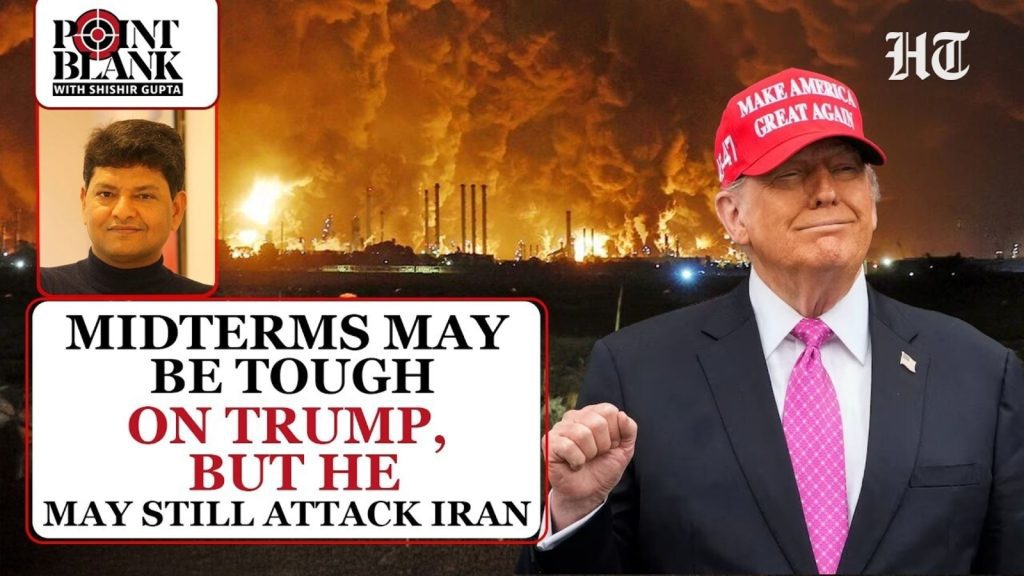
America’s approaching midterm elections may test Donald Trump’s political strength, but for India, the stakes extend beyond who controls Capitol Hill. Trade negotiations, Washington’s ties with Pakistan and the possibility of renewed conflict with Iran form a more consequential set of concerns.
Because their opposition to the other party outweighs dissatisfaction with the president, voters may remain with Republicans. His reasoning centred on polarisation, turnout and local candidates. Disappointment with Trump, he argued, does not automatically translate into support for Democrats.
Asked about the implications for India, Gupta identified three principal concerns: a bilateral trade agreement, the inward-looking impulses of Trump’s Make America Great Again agenda, and Washington’s relationship with Pakistan. He expected the direct impact of the midterms on India to be limited; what mattered more was the policy direction that followed. Competitive tariffs, predictability and mutual benefit, rather than a politically convenient deadline, would determine whether an agreement was acceptable. Beyond bilateral concerns, Gupta identified Washington’s relationships with Moscow and Beijing as important variables for India. Discussing the G20 foreign ministers’ meeting referred to in the conversation, he highlighted Ukraine and Iran as the central issues. He described India and Turkey as working to bring Russia and Ukraine towards dialogue and a ceasefire. He linked that risk to the political circumstances facing Trump and Israeli Prime Minister Benjamin Netanyahu, suggesting that both could see an opportunity to act before their room for manoeuvre narrowed.
“India is not going to sign a trade deal in a hurry,” he said. On Ukraine, he saw greater American recognition of the need for negotiations – an approach he said India had long advocated.
“My bet would be that … he may lose the House but he may retain the Senate,” he said, presenting divided congressional control as his preferred forecast rather than a certainty.
