
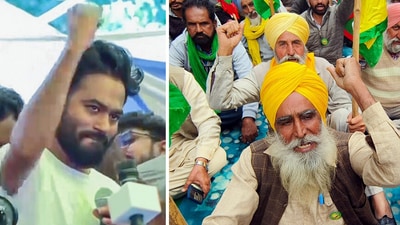
Five years after farmers camping on Delhi’s borders forced Prime Minister Narendra Modi into the biggest policy retreat of his tenure, the resignation of education minister Dharmendra Pradhan on Saturday marks only the second time sustained street pressure — this time by Gen-Z and others galvanised by the Cockroach Janta Party phenomenon — has made the Modi regime visibly reverse course. And it’s the first time it has cost a minister his post.
Event Context
The last such retreat came on November 19, 2021, when PM Modi announced the repeal of three contentious farm laws after farmers, mostly from Punjab, Haryana and western Uttar Pradesh, had camped at Delhi’s border points for a year. The acts were off the books by early December, weeks ahead of assembly elections in Punjab and Uttar Pradesh. An earlier, smaller retreat came also on a farmers’ issue in August 2015, when the government allowed a land acquisition ordinance to lapse after protest led by the Congress.
Dharmendra Pradhan’s resignation goes further than those retreats.
Coming after weeks of protest by the CJP and pressure also by the Congress-led Opposition, the resignation breaks with a doctrine PM Modi’s government has held to for nearly all of its 12 years in power.
Team Analysis
Congress president Mallikarjun Kharge has called the minister’s resignation “a victory for truth and a defeat for PM Modi’s arrogance”.
Leader of the Opposition Rahul Gandhi said in a statement, “Dharmendra Pradhan’s resignation is a huge step towards reshaping our education system… Heartiest congratulations to every young person, every student who took to the streets and stood firm to protect democracy, the Constitution, and their future.”
He added, “For other sections of society — farmers, labourers, the poor, every person whom this government has suppressed and crushed — true courage lies in standing firm in a constitutional manner for one’s dignity. The time has come to remove this government.”
Deja vu moment
Earlier this week, there were tense moments in Haryana and Punjab as farmers sought to march to Delhi for their own demands and in solidarity with the students. That was halted by authorities for the time being. But, on Saturday morning, the Bhartiya Kissan Union (Ekta-Ugrahan), one of the chief organisers of the 2020-21 protest from Punjab, announced it would go to Jantar Mantar. Farmer leaders from unions had already come to give support to the CJP in person but not in massive groups yet.
Student activist Aameen Amitoj — who was on hunger strike at the CJP protest and was also part of the 2020-21 farmer protest — recalled a similarity in turning points.
When the police were on July 18 taking away Sonam Wangchuk who was on hunger strike on the main stage of CJP, he and others from AISA were on a smaller stage near it.
“I saw the cops bundle Sonam Wangchuk away and my mind went to that moment when (UP-based farmer leader) Rakesh Tikait got emotional on camera,” Amitoj told lawyer and Rajya Sabha MP Kapil Sibal on the latter’s YouTube channel earlier this week. He was referring to the turn of events after the violence at a Republic Day tractor rally on January 26, 2021. Police had cut water and power to the Ghazipur border camp, farmers began drifting home, and the UP administration served an eviction ultimatum.
“It was Rakesh Tikait’s breakdown — with tears in his eyes, saying on camera that he’d rather die than vacate the site — that reversed it all. Within hours, farmers were driving back to Ghazipur, and by the next morning thousands had returned, reviving the protest,” he said.
The CJP movement had two such inflection points. Wangchuk was forcibly shifted from Jantar Mantar to Safdarjung Hospital on July 18; and two days later, on July 20, police used tear gas and baton charges on a CJP march towards Parliament. Crowds increased thereafter, and protests were held in Mumbai, Kolkata, Chandigarh and other places.
At the CJP site at Jantar Mantar, many of the protesters identified as children of BJP-backing parents.
“I am asking everyone to here to sign my notebook,” Amit Choker, 18, from Kota in Rajasthan, told an HT reporter at the site after the minister’s resignation.
Asked why, he said, “When I was leaving, my parents said that ‘it’s a fake protest’ and that we won’t get any support. I’ll go home and show these autographs of people who stood here with me July 20 onwards.”
The CJP has said the resignation is not the end of its campaign. Dipke, addressing supporters after Pradhan’s announcement, said two demands remained: no criminal cases against protesters, and compensation for the families of students who died by suicide following the NEET paper leak. By evening, the CJP announced the government had accepted those demands, and that the protesters should now go home.
