
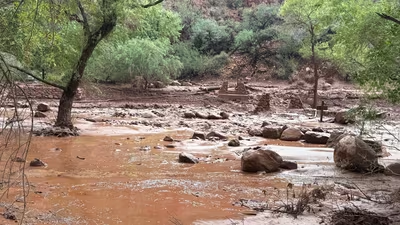
The Grand Canyon, Arizona was hit by a powerful flash flood on Saturday, turning normally calm areas into fast-moving waterways within minutes. The flooding damaged trails and footbridges, pushed boulders and metal structures into the Colorado River, and forced dozens of hikers and campers to leave the area
No injuries have been reported. Starting Monday, tourists will not be able to stay overnight at lodges and hotels within Grand Canyon National Park, and residents who live there year-round are being asked to conserve water. The powerful floodwaters widened the creek bed, forming what appeared to be a new river rapid. Rafting trips on the Colorado River have also been halted for now. Evacuee David Gregory, who was hiking with a small group when the flooding hit, was taken out by helicopter and later set up with a hotel room for the night.
About 15 people may be missing at the Grand Canyon after the flood, according to park officials, as per CNN. The park service said an earlier figure of 20 missing or unaccounted for was only a working estimate. The flooding began around 2:30pm local time Saturday after a series of storms swept over Bright Angel Canyon and the Phantom Ranch area, according to a news release from the National Park Service. At least 62 people have been evacuated as of Sunday afternoon, the Grand Canyon National Park said in a statement. More than 60 people were evacuated from Phantom Ranch alone, as per reports. Showers on Sunday were mostly confined to the north side of the canyon, where rainfall rates of up to 1 inch per hour have been observed. National Weather Service meteorologist Justin Johndrow said about half an inch to 1 inch of rain fell within about 30 minutes in the rocky area, where there’s a steep drop in elevation. He said the flooding happened on the north side of the Grand Canyon, where Bright Angel Creek drops around 6,000 feet from the North Rim down to the Colorado River. The Grand Canyon is about a mile deep and the national park stretches along 278 miles of the Colorado River, according to the National Park Service. More than 400,000 people visited the park last month, while more than 4.4 million visited in 2025.
The Colorado River was closed to river traffic on Sunday due to metal structures and debris flowing down the river.
“Nearly all footbridges spanning Bright Angel Creek were destroyed, eliminating hiker access across the creek,” the federal agency said. The flooding also knocked out the sole water pipeline that serves tourists and residents at the park, officials said, as per AP. “These measures are crucial for ensuring the safety and sustainability of water resources,” the park said in a statement. “We realized the creek near camp was black with debris and flowing rapidly,” he told CNN. More rain and thunderstorms were possible for the area into Monday, according to AP. “Most of it ran off instantly,” he said, as per AP.
Popular tourist spots, including Bright Angel Campground, Phantom Ranch, and parts of the North Kaibab Trail, remained closed on Sunday while park officials surveyed the damage, as per AP.
