
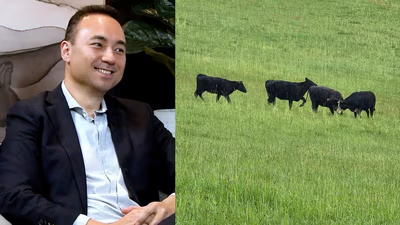
In a May 2026 episode of the Farm Change with Romey podcast, Wong, a Melbourne lawyer, business owner, and host of the Discernible podcast, talked about how he came to be running a 150-acre regenerative property outside the city. Matt Wong never planned to be a farmer. He just planned to hire one. Three years later, he was fixing pumps, moving cattle, and working through brutal heat. His story suggests that big life changes don’t always start with a big plan.
Wong and host Romey talk about the Dunning-Kruger curve as an honest map of the farming journey. They also discuss the despair that hits when plans collide with what the land wants to do. They argue that in some cases outsiders can become effective regenerative farmers, even without generations of experience. That view may appeal to newcomers. Wong’s days are long and physically taxing. However, spending some time in nature can have its own set of benefits. But there is a catch. The study looked at time in nature for recreation, not farm work. It also shows an association, not that nature caused better health. Wong notes that a strong network is worth more than any piece of machinery. He discusses Joel Salatin and Polyface Farms and what he would tell any lawyer, doctor, or office worker who ever wondered if this life is for them. You don’t need to buy land to relate to Wong’s story or take something away from it. You can volunteer on a farm, join a community garden, or just spend more time outside. Farming can be hard, and it might not be for everyone. But Wong’s story shows it’s okay to change path, even if it is muddy and unplanned.
He describes the physical transformation that comes from 14-hour days outdoors. A 2019 study by White and colleagues in Scientific Reports surveyed 19,806 adults in England . Those who spent at least 120 minutes a week in nature were more likely to report both good health and high wellbeing.
