
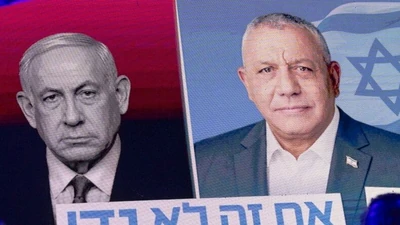
Israel’s election ended in a political deadlock on Tuesday. Exit polls show that neither Prime Minister Benjamin Netanyahu nor his main challenger Gadi Eisenkot secured the 61-seat majority needed to form a government.
But both sides remained short of the threshold required to control the 120-seat Knesset. Arab-led parties also made significant gains, with projections showing they could secure up to 17–18 seats, potentially becoming a decisive factor in coalition negotiations. The results represent a setback for Netanyahu, whose right-wing coalition held a majority before the election but is now projected to fall well short of 61 seats. Netanyahu’s Likud party remained the largest single party, with exit polls placing it at around 24–25 seats.
Exit polls from Israel’s three major broadcasters projected Eisenkot’s opposition bloc slightly ahead of Netanyahu’s alliance. However, his traditional allies, including far-right and ultra-Orthodox parties, failed to secure enough seats to guarantee another Netanyahu-led government.
CNN correspondent Jeremy Diamond said Eisenkot currently holds a “very narrow edge” based on exit polls but remains far from the majority needed to form a government.
