
On a student exchange programme in St Petersburg in 2014-15, the lanky young Japanese man impressed Russian friends with his knowledge of their city and its literary legends, such as Fyodor Dostoyevsky. Imai yuki spent years learning to read Russian literature in the original. Mr Imai parlayed his language skills into a job covering Russia for the Hokkaido Shimbun, a regional newspaper from Japan’s northernmost big island. On October 13th operatives from the Federal Security Service (FSB) burst into his hotel room on Sakhalin, off Russia’s far-eastern coast, and handcuffed him.
“You are suspected of espionage,” a masked Russian officer says in a video released by the FSB. “V smysle?” a befuddled Mr Imai answers in Russian. “What do you mean?”
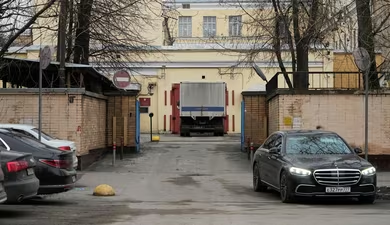
Mr Imai may also end up embroiled in global hostage diplomacy, much like Evan Gershkovich, an American journalist who was arrested on baseless espionage charges in 2023 and freed 16 months later in the largest prisoner swap between Russia and the West since the Cold War . Mr Imai is now being held at Lefortovo (pictured), a high-profile detention centre in Moscow. The meaning of his arrest is far bigger than a local news story. His case ensures a freeze in relations between Japan and Russia will only get deeper.
Talks to resolve that territorial dispute have been frozen, along with the overall relationship, since Russia’s full-scale invasion of Ukraine in 2022, which Japan vehemently opposed. Talk of swaps has increased as Vladimir Putin and Donald Trump explore a possible meeting at next month’s APEC summit in China: at Mr Trump’s request, Mr Putin last week released an elderly American held in Russian prison for four years. In Russian, such detainees are referred to as aktivy (assets) in the country’s obmenny fond (exchange fund). Russia may also see Japanese citizens as fungible aktivy. Mr Imai’s arrest comes at a low point in the complex and consequential relationship between Japan and Russia. In the waning days of the second world war, Russia took back control of Sakhalin (where Mr Imai’s grandfather grew up), as well as the nearby Kuril Islands. The two have yet to sign an official peace treaty ending that war; Japan still claims sovereignty over the four southernmost Kuriles, which it calls the Northern Territories. Several factors may explain Russia’s recent frostiness. Japan’s ongoing efforts to strengthen its armed forces , while focused on countering China, also have implications for Russia, which uses the Sea of Okhotsk as a bastion for nuclear submarines. So too does prime minister Takaichi Sanae’s push to build up Japan’s intelligence services .
Arresting a journalist for being a spy “probably means Russia is trying to get somebody home”, reckons Mr Gershkovich, the author of “This Cursed Beautiful Land”, a book about his experience and Russia’s hostage diplomacy. Officials speak openly about its status: “It may be time to fill up our exchange fund with European and American idiots in order to get our guys out,” Dmitry Medvedev, a former president turned attack dog, wrote days before Mr Imai’s arrest. For Russian spooks, Japan has long been an important posting, says Andrei Soldatov, an expert on Russian intelligence: “You can’t really approach Americans in America, but you can try to recruit Americans there.”
American negotiators freed two Japanese nationals from jail in Belarus as part of prisoner exchanges last year.
