
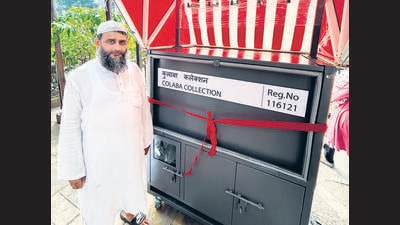
MUMBAI: The city’s iconic Colaba Causeway is set for a major aesthetic and structural transformation, following a ₹ 2.28-crore contract which will be awarded by the BMC to deploy 91 uniform-sized hawker stalls. The initiative is designed to clean up cluttered footpaths, boost local tourism, and improve pedestrian mobility along the heavily frequented shopping stretch.
Funded entirely through the District Planning and Development Council (DPDC), the project positions Colaba as the first locality in Mumbai to institute standardised street-vending stalls allocated strictly to verified vendors. This modernisation push is backed by local MLA and legislative assembly speaker Rahul Narwekar alongside former BJP corporator Makarand Narwekar who originally outlined the plans to introduce uniform stalls, shop name boards and upgraded road infrastructure. The project follows the successful deployment of a prototype stall on the Causeway. The first official batch of the new stalls is expected to arrive within the coming weeks.
“If the pilot proves successful here, the BMC plans to replicate the standardised hawking stall template across other key hawking zones in Mumbai,” said a civic official. Narwekar said that the initiative would “significantly boost the local aesthetics and tourism appeal of Colaba”. “Uniform street vending stalls to eligible vendors will improve Mumbai pedestrian movement,” he said. “Given that thousands of shoppers, including international tourists, frequently visit areas like Colaba Causeway, the successful implementation of this project will elevate it to a world-class shopping destination.”
Infrastructure firm Pushpam Infraprojects has been tasked with building the stalls, which will feature strict dimensions of approximately 1 x 1 metre. Under the new civic framework, only street vendors holding the BMC’s official QR code-based identity cards will be eligible to operate from the new structures.
“By streamlining stall layouts into a unified, disciplined design, the project ensures that vibrant street commerce will coexist seamlessly with pedestrian movement,” stated Makarand Narwekar, emphasising that a BMC-managed hawker system was the most viable path forward for Mumbai’s commercial streets.
