
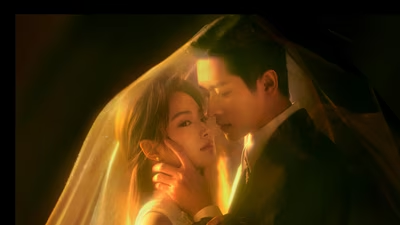
Chinese dramas continue to draw viewers in with their mix of romance, family drama and unexpected twists. The Lament of Autumn, streaming on VIKI, brings these elements together in a story of love, betrayal and power struggles. Set in 1920s China , the Republican-era drama follows two people from very different worlds whose lives collide after an assassination attempt, pulling them into a web of family secrets and political intrigue. Starring Cheng Lei and Xu Ruohan, the series builds its central romance on attraction, mistrust and clashing personalities. [ Warning : Spoilers ahead.]
The first 20 episodes of this 40-episode C-drama waste little time setting up the danger and political games that drive the story. When an attempt is made on Chang Xuan’s life, Ping Jun finds herself under suspicion while trying to earn money for her ailing mother’s imported medicine. Taken into military custody, she endures a gruelling interrogation but refuses to confess to a crime she did not commit. Her innocence is eventually established when the real attacker, Feng Yao (Chen Yaxi), comes forward. Her tragic past, including the loss of her family to warlord soldiers, also highlights the human cost of the ongoing conflict. The biggest draw of the drama is the chemistry between Cheng Lei and Xu Ruohan. There is an undeniable tension in their scenes, and watching their relationship change over time is a big part of what keeps you invested. Their love story is far from smooth, and honestly, if you aren’t getting frustrated with these two at some point, are you even watching the same show? From the very beginning, theirs feels like a relationship headed for heartbreak, and that sense of impending doom is precisely what makes it so compelling. In a world where warlords dictate life and death, the romance between Chang Xuan and Ping Jun cannot be a delicate, egalitarian courtship—it is necessarily jagged, forged through manipulation, and steeped in mutual suspicion. The show smartly uses their dynamic to mirror the era itself: beautiful on the surface, but deeply dangerous underneath. Chang Xuan’s actions in the early episodes may be hard for some viewers to accept. He manipulates Ping Jun, uses her to influence people around him and repeatedly tries to dictate the terms of their relationship. At times, his behaviour makes it difficult to see him as a romantic lead rather than an antagonist. What I find harder to understand is how easily some viewers excuse his actions and romanticise it. He crosses Ping Jun’s boundaries, behaves aggressively and appears to regret hurting her, only to fall back into the same patterns. There is a difference between understanding a character’s flaws and romanticising them. Appreciating an actor’s performance does not mean we have to defend every choice their character makes. A character’s actions should be open to criticism, regardless of how attractive they are or how much we love the actor playing them. Ping Jun’s willingness to stand up for herself is one of her most admirable qualities, but there are times when the writing stretches her defiance beyond what feels believable. Her courage is commendable, but the story could have done more to show the real cost of taking those risks. Her constant back-and-forth with Chang Xuan can also test one’s patience. There are moments when you find yourself wondering why someone as Ping Jun should have to put up with a man like him. Of course, this is a drama, and not every relationship is meant to be easy to watch. The toxic, push-and-pull nature of their relationship is so frustrating that some viewers will find it genuinely impossible to root for them as a couple.
The Lament of Autumn is a wildly uneven ride that constantly wrestles with its own identity, caught somewhere between a gripping, prestige political thriller and a pulpy, deeply toxic romance. When the series fires on all cylinders, it is genuinely spectacular television that keeps you on the edge of your seat. However, the sheer weight of its flaws prevents it from reaching masterpiece territory. If you can stomach the red flags and the occasional descent into soap-opera antics, it makes a compelling binge and its jagged edges might just be the exact hook that keeps you watching.
