
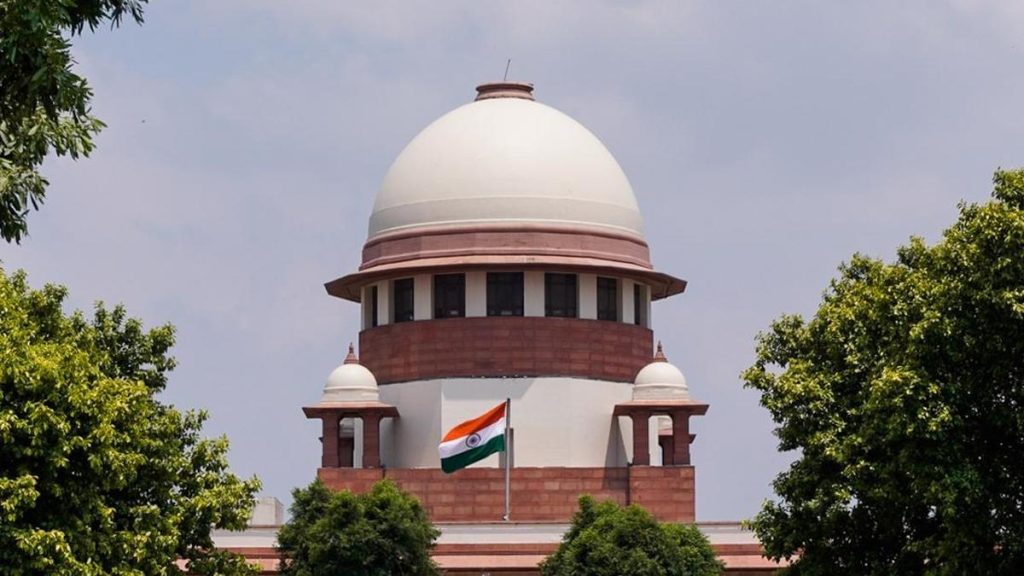
The Supreme Court has held in a judgment that ordinary private citizens can file criminal complaints against candidates for giving false information or concealing information while filing their nomination papers for an election.
Concealing personal information or filing false details to hoodwink the voters was a non-cognisable and bailable offence under Section 125-A of the Representation of the People Act, 1951. Justice Datta interpreted that the rigour of Section 195 of the Code of Criminal Procedure (CrPC), that only a complaint lodged by a public servant must be taken cognisance of by a court of law, did not affect Section 125-A of the 1951 Act. “No court would be barred from taking cognisance of an alleged offence under Section 125-A, even on the complaint lodged by a private person. This interpretation is fortified by the absence of any provision in any enactment stipulating that a complaint in relation to an offence under Section 125-A can only be lodged by a public servant,” Justice Datta, who authored the judgment, held.
The court’s judgment empowers the vigilant citizen-voter with the locus standi to directly act against dishonesty in electoral politics, and ensure transparency in polls right from the stage of filing nominations. Candidates have to file personal affidavits along with their nominations. Senior advocate Sanjay Nuli, who appeared in the case, pointed out that these affidavits were part of legislative efforts to maintain the purity of elections and a healthy democracy. Voters must be educated and well-informed about the contesting candidates, including the latter’s assets, educational qualifications and criminal antecedents. The Section provides that a guilty party would be liable to face imprisonment for six months, fine or both.
“If indeed it were the intention of the legislature that cognisance of any offence relating to the furnishing of false information by a candidate in an affidavit with intent of being elected in an election could only be taken if the complainant were a public servant, the same could have been provided by an amendment of Section 195 CrPC,” the court noted. The apex court further pointed out that Section 125-A and its penalty for falsehood would prevail “notwithstanding anything contained in any other law for the time being in force”.
