
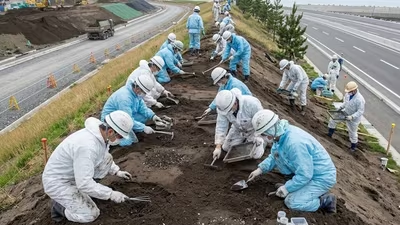
For years, huge quantities of soil dug up during the cleanup of Fukushima have been stored in vast facilities near the site of the 2011 nuclear disaster. Now, Japan is trying something unusual with some of it: putting the soil back into public infrastructure under strict controls.
Japan’s Ministry of the Environment states that final disposal of removed soil and other waste generated by the cleanup must be completed outside Fukushima by March 2045. In March 2025, Japan’s Environment Ministry established formal standards for managed recycling. Recycled material made from removed soil must contain radioactive cesium at 8,000 becquerels per kilogram or less, a level the ministry says corresponds to an additional effective dose of no more than 1 millisievert per year under the relevant exposure scenario.
Japan is giving some of the soil removed during the Fukushima nuclear cleanup a second life by using it in carefully controlled public works instead of sending all of it to permanent disposal. Rather than sending all of the material to a permanent disposal site, the government plans to reduce the amount requiring disposal by recycling soil with low levels of radioactive contamination in carefully managed public works. The approach is known as managed recycling. It does not mean simply taking contaminated earth and spreading it around. Soil must first meet specified radioactivity standards and then be used in projects where its movement, exposure, and long-term condition can be controlled. In addition, there should be a mechanism to prevent the material from dispersing or washing away. Radiation dose monitoring must take place during construction, operation, and maintenance of the facilities, along with the documentation of the location, amount, and radioactivity of the recycled soil. The Environment Ministry has required covering in some cases, with the recycled soil placed beneath a layer of uncontaminated material to limit environmental exposure. The government had already tested the approach before setting these standards. Some demonstration projects were carried out in Fukushima; among them were an agricultural land project in the Nagadoro area of Iitate Village and a road embankment project in the Interim Storage Facility.
