
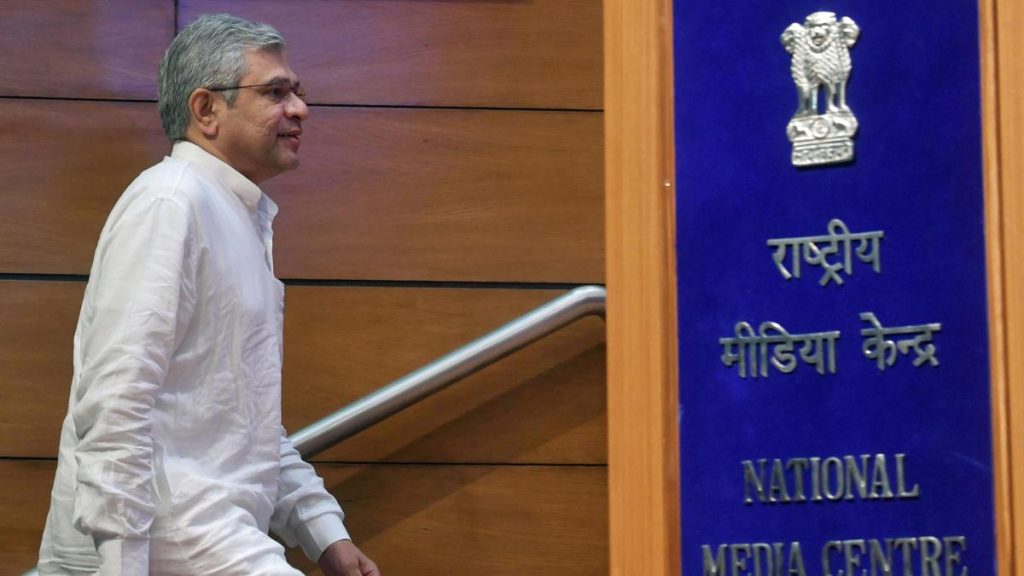
The Information and Broadcasting Ministry on Wednesday advised TV news channels to ensure that programmes do not promote communal disharmony or anti-national attitudes, remedial action is taken against abusive or inflammatory remarks, and AI is used responsibly.
The Ministry advisory called for strict adherence to the Programme Code prescribed under the Cable Television Networks (Regulation) Act and the Cable Television Networks Rules. The advisory noted that live coverage of anti-terrorist operations by security forces is prohibited and coverage must be limited to periodic briefings by an authorised officer until the operation concludes. Channels should use caution, responsibility, and editorial discretion when broadcasting graphic or disturbing visuals, avoiding content that offends good taste or decency or causes unnecessary viewer distress. Reporting must be fact-verified, truthful, balanced, and responsible. The TV channels have been asked to avoid sensationalism, glorification or normalisation of unlawful or socially undesirable conduct and repeated looping of disturbing visuals. The use of blurring or masking wherever warranted has been advised. Extra care has been advised for visuals involving crimes against women and children. The advisory has suggested that visuals related to natural disasters, major accidents or incidents should be time-stamped where necessary to avoid unnecessary public panic and reporting must be based on verified facts. They have been advised to maintain editorial control through careful participant selection and pre-sensitisation, and to take immediate remedial action, such as muting, disclaimers, interruption or discontinuation of feeds, to stop derogatory, abusive, or inflammatory content. Broadcasters have also been advised to strengthen editorial and content-review mechanisms, sensitise all personnel involved in news gathering, editing, production, transmission, and telecast, and conduct regular workshops and training programmes on Programme Code compliance. It cautioned that violations may invite action under the Cable Television Networks (Regulation) Act.
Visuals should be time-stamped where necessary so that they are not mistaken for live coverage.
It said the Inter-Departmental Committee (IDC) had observed that certain telecasts were not in conformity with the Rules, emphasising that “inappropriate behaviour or language should not be normalised in telecasts”. deliberate falsehoods, suggestive innuendos and half-truths must not be telecast, said the advisory While reporting crime or violence. It said that channels must use only authentic maps of India published by the Survey of India in telecasts, graphics, and digital representations; programmes, including live debates and panel discussions, must not promote communal or anti-national attitudes. Channels must not reveal any direct or indirect details that could identify victims of sexual offences, including photographs, family details, locality, remote facts or other identifying information, it said. About the use of AI, the Ministry said it should remain assistive and must not compromise the accuracy, authenticity or sensitivity of news content.
