
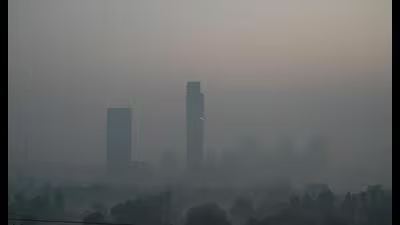
The beginning of pollution follows a similar pattern in Gurugram. As air quality deteriorates, civic officials call meetings, departments are asked to intensify inspections and enforcement drives gather pace. For a few days, the focus is on cleaning up the city. But the same problems return each year.
So a question rises, “Why does Gurugram still lack a lasting solution to pollution?”
On October 14, a Commission for Air Quality Management (CAQM) inspection covering 104km of roads found 258 violations, including accumulated dust, construction waste, damaged footpaths and potholes. Of these, 174 were on roads maintained by the Municipal Corporation of Gurugram (MCG) and 84 on those under the Gurugram Metropolitan Development Authority (GMDA).
Setting garbage on fire adds to the problem. Residents continue to report burning waste and smoke from vacant plots, often saying action comes only after the damage is done. Officials have issued instructions on mechanical sweeping, water sprinkling, construction-site inspections, scientific waste disposal and action against open burning. The Haryana environment minister has also called for weekly pollution-control reports. The question is whether these measures will change the conditions residents face on the roads. Gurugram’s pollution cannot be addressed through a few weeks of heightened vigilance before winter. Existing instructions need to be put into practice. Otherwise, each pollution season will bring the same meetings and deadlines, while residents continue to wait for cleaner air.
Fire department data recorded 239 waste-fire incidents between January 1 and September 28. By October, officials had identified more than 300 spots linked to illegal garbage burning across Gurugram and Manesar.
