
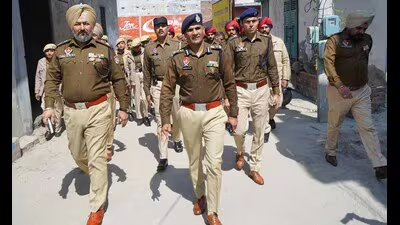
The countdown to the 2029 General Election has begun. Police preparedness cannot wait for the election schedule announcement. Recruitment, training, deployment planning and inter-agency coordination take time. The work must start now.
Across states, demonstrations, activism and mass mobilisation pressure police forces. Peaceful protest is a democratic right; violence and criminal conduct must be handled lawfully. The challenge is maintaining public order without compromising civil liberties, impartiality or everyday policing. Reviews alone are insufficient. Rehearsals must start now before a crisis occurs. Conduct realistic mock exercises for sudden crowd mobilisation, escalation, rumour-driven unrest, emergency evacuation, communication breakdowns, and prolonged deployments. Test command-and-control systems, reserve mobilisation, and coordination among police, district administration, and emergency services. Evaluate failure points and correct weaknesses immediately to prevent crises. Women police must have meaningful operational roles in field deployment, public engagement, liaison, searches, victim assistance, crowd management, and supervision. This requires timely recruitment, specialised training, proper facilities and career progression—not token presence. Home Guards and civil defence personnel can support traffic management, evacuation, emergency assistance and relief when properly trained and supervised. Joint exercises with police, district administration, fire services, and medical teams should clarify responsibilities and test coordination before a crisis occurs. Emergency calls, field communications, traffic info, incident reporting and lawful CCTV feeds should feed into interoperable command systems. Technology enables timely decisions and preserves evidence. It cannot replace professional judgement, accountability, or direct public engagement. Police leadership needs ready access to government advocates and legal advisors regarding statutory powers, arrests, assembly restrictions, use of force, evidence and judicial directions. Arrangements must support prompt responses to urgent court proceedings, including public-interest litigation. Legal support must strengthen compliance and accountability, never shield misconduct or obstruct judicial scrutiny.
Diverting personnel to law-and-order duties hurts investigations. Separate investigation teams must be maintained in practice, not just on paper. Serious crimes, offences against women and children, cybercrime, evidence collection and court deadlines cannot be neglected. Proper staffing and supervision must ensure continuous investigation.
