
The Pune district administration has directed local self-government bodies to plan a 20% reduction in water consumption amid concerns over a possible intensification of El Niño and water scarcity extending into the next monsoon, while the city could face a cut in water supply of up to 25%.
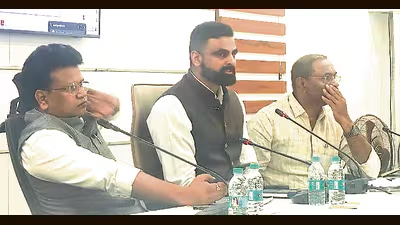
The directives were issued at a meeting chaired by district collector Jitendra Dudi on Thursday to plan the judicious use of available water reserves and ensure drinking water security till August 31, 2027. The meeting also reviewed drought-related crop losses, with around 80% of the assessments completed and the administration aiming to finish the exercise by Sunday. Meanwhile, crop-loss assessments have been underway for around 15 days by joint teams comprising officials from the revenue, rural development and agriculture departments. Dudi said approximately 80% of the assessments have been completed across the district, with the remaining work targeted for completion by Sunday. Around 60 to 70% of the assessments in these two talukas have been completed; officials said. It comes amid a wider drought situation in the state where 265 talukas have been declared drought-affected. As of October 15, the Khadakwasla reservoir has around 20 thousand million cubic feet (TMC) of usable water which excludes dead storage, evaporation and buffer reserves. This is approximately 25% lower than the usual availability, necessitating careful allocation of water for drinking and irrigation purposes. The water resources department said that Pune city will need to reduce its water consumption by 25%. Officials said that while the Pavana, Bhama Askhed, Chaskaman and Nira reservoirs currently have water stocks ranging from 90 to 95% of their respective capacities, local bodies must plan for a 20% reduction to sustain supplies till August 2027.
Furthermore, Dudi has directed the formation of joint flying squads comprising officials from the revenue, police and water resources departments and the Maharashtra State Electricity Distribution Company Ltd (MSEDCL) to prevent unauthorised water extraction. The squads will seize pumps and motors used for illegal extraction. The MSEDCL has been instructed to take strict action, including disconnecting electricity connections where water theft is detected. Police assistance will also be provided where necessary to prevent law-and-order issues during enforcement. The administration has started similar assessments in the Ambegaon and Junnar talukas that were recently declared drought-affected. Once the exercise is completed, the district administration will submit a demand for funds to the state government to facilitate compensation for affected farmers. The meeting was also attended by Pune municipal commissioner Naval Kishore Ram, Zilla Parishad chief executive officer Gajanan Patil, water resources department chief engineer Amol Kolhe, superintending engineer Phalke, and other senior officials. Officials expressed concern that the possible strengthening of El Niño from December could affect the next monsoon, making long-term water management necessary. Superintending engineer Prithviraj Phalke also proposed supplying water to the city on alternate days in view of the limited availability. The administration is also preparing to prioritise drinking water over other uses. The focus is on ensuring drinking water security while allocating the remaining available stock for agricultural and other requirements.
The district administration plans to seek funds from the state government after completing the crop-loss assessments, with efforts underway to ensure that farmers receive financial assistance before Diwali; Dudi said. “Water must be used judiciously and in a planned manner to ensure that drinking water remains available till August 31, 2027,” officials said during the meeting. Water will be allocated for the Rabi irrigation season based on availability, but officials said summer irrigation rotations may not be possible after accounting for drinking water and other planned allocations. Dudi said that the administration is pursuing both immediate relief measures for farmers and long-term water management to address the drought situation.
