
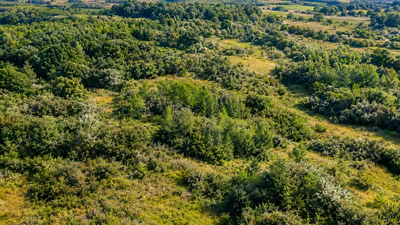
An English farmer gave up farming his 377 acres in Bedfordshire in the late 1980s and let it go wild. The Wildlife Trust for Bedfordshire, Cambridgeshire and Northamptonshire says that by the end of 2024 it was home to half of all the nightingales in Bedfordshire. What if the best thing a farmer could do for his land was to do nothing? That land is now known as Strawberry Hill. It was also home to vast numbers of other threatened species, including turtle doves, warblers and bats.
In the study, Donald, Green and Heath asked whether farming intensity was the explanation for a sharp decline in Europe’s farmland birds. That fall was in the last quarter of the 20th century. They discovered countries with more intensive agriculture had significantly larger declines in population and range size. The authors say the results suggest that recent trends in agriculture have had a deleterious effect on bird populations across the continent.
A 2001 study in Proceedings of the Royal Society B gives helpful background on why farmland birds have struggled. Cereal yield explained more than 30% of the variation in population trends alone. However, the study didn’t look at Strawberry Hill and can’t therefore account for everything that happened there.
