
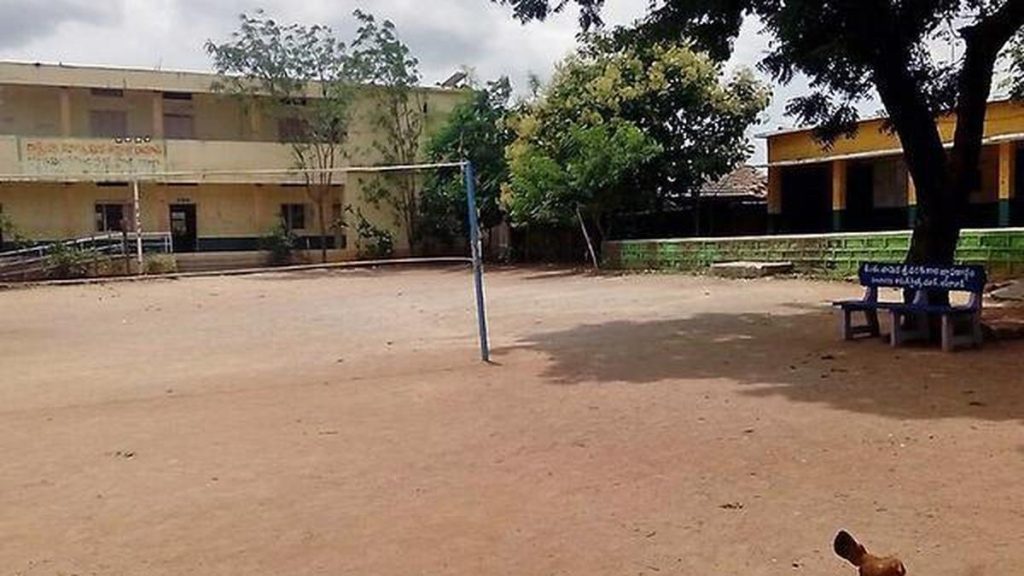
In Telangana, a collective of academics, bureaucrats and activists known as the Telangana People’s Front was on a 12-day tour of districts in the State to understand and highlight the state of schools called ‘Vidya Bus Yatra’. The state of schools and teaching has been in the spotlight nationally.
Budgetary support for education has declined to a single-digit percentage of the State outlay and has remained so over the past decade. After the formation of the Congress government by A. Revanth Reddy, a Telangana Education Commission was formed under former IAS officer Akunuri Murali to suggest measures to improve the sector. After his two-year term with the commission expired, Mr. Murali quit the commission and has take up cudgels for reform and started the ‘Vidya Bus Yatra’. The report has four annexures that are draft Bills that lay out a clear map to reinforce and rebuild the education sector in Telangana. It also created a checklist on what constitutes a Telangana Foundation School. The school is a pre-primary to Intermediate facility and offers English-medium education with airy classrooms, a playground, free transport, three meals a day, and sports facilities. Schools without compound walls. Taps without running water. Locked toilets or dysfunctional toilets. A drinking water tap may be in the school, but how often it functions is different. “Some schools have excess classrooms, others without enough rooms. All are under the Education Department, but the head of each institution doesn’t want to share the barely functional infrastructure.”
The Telangana Education Commission submitted a 354-page report after visiting 305 institutions over 14 months in all 33 districts. Also sketched out was a six-phase plan to upgrade the infrastructure at a total cost of ₹31,600 crores, staggered across five years. A functioning model of the concept is Telangana Public School at Arutla, about 50 km from Hyderabad. This is the same issue flagged by the UN report ‘Progress on drinking water, sanitation and hygiene in schools 2015-2025’. The UN report found that 50 million, or five crore, Indian children still lack access to sanitation service in their schools.
In Gattuguddenapalli village, the government school had fewer than 60 students, where the inspiration was a science and Telugu teacher, but one of the children wanted either salt or jaggery to be given to add taste to “Ragi java (millet broth)”. One of the academics who was part of the bus yatra says that mismanagement of resources with irrational deployment of staff is a big bugbear.
The Telangana People’s Front wants to mobilise parents and society to force the government to act on its proposals to raise spending on education from the current 8.2% to 18%. Currently, the government spends ₹1,10,00 on each student, according to an estimate. Once the resources are shared, facilities expanded then this cost will drop to ₹55,000, according to a TPF estimate.
Make government schools share resources like playgrounds, classrooms, labs, library facilities, etc.
