
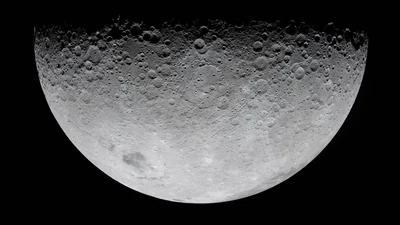
NASA has now released thousands of images and hours of recordings from the mission, offering a closer look at what the crew saw during its journey around the Moon. The Moon may appear grey when we look up at it from Earth, but astronauts on NASA’s Artemis II mission observed a wider range of colours on its surface.
The Moon is often seen as a grey body in the night sky, but its surface can show subtle shades of brown, tan, green, yellow and blue under certain lighting and viewing conditions. These colours can be difficult to notice in ordinary photographs, particularly when images are processed to highlight surface features or when the Moon is viewed from a distance. The colours are not simply a visual effect. They can offer clues about the minerals and rocks present on the lunar surface, as well as the Moon’s volcanic past. Different materials reflect sunlight differently, creating variations in colour that scientists can study to learn more about how the surface formed and changed over time.
The space agency has made more than 800 gigabytes of Artemis II lunar science data available to the public and scientific community, according to NASA’s official website . The release includes more than 11,000 full-resolution images and videos, 8.5 hours of audio recordings of astronauts discussing their observations, and images annotated by the crew.
NASA said the material would support further research and help inform plans for future Artemis missions.
During the lunar flyby on April 6, 2026, the four astronauts took photographs, recorded their observations and marked features of scientific interest.
Their notes and descriptions offer information that can complement decades of data collected by earlier Apollo missions and robotic spacecraft.
