
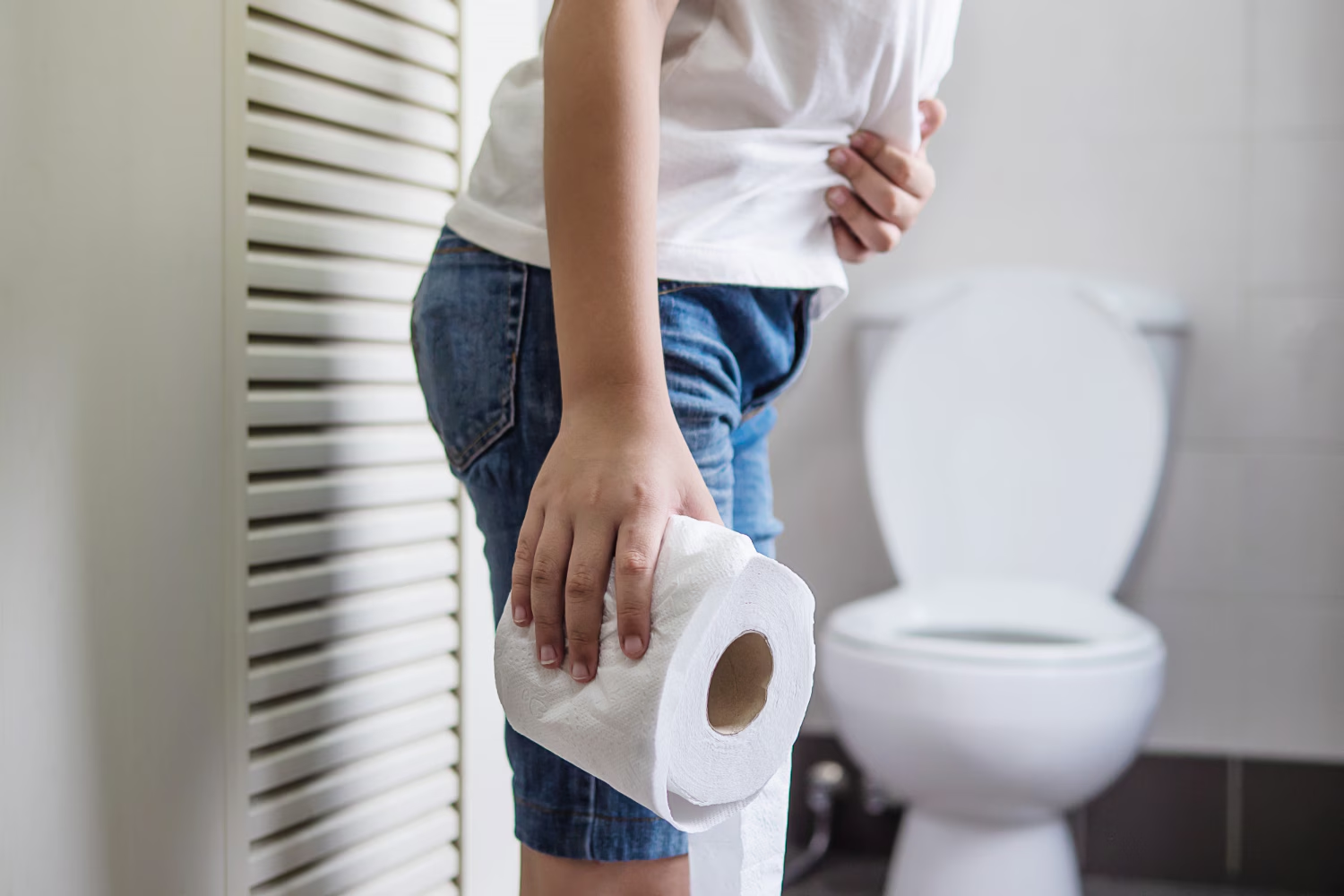
Lower back pain is tied to posture-related problems, especially when you spend long hours sitting at a desk. But if you are also struggling with constipation, could the two be connected? After all, you are straining for long time in washroom when constipated . But a gastroenterologist unveiled a layered reasoning for this doubt.
Dr Santhosh Rajendran, junior consultant in gastroenterology at SIMS Hospital, Chennai, revealed that constipation may indirectly contribute to lower back pain in some cases. he revealed a possible chain of events linking constipation to lower back pain While the doctor clarified that the cause-and-effect relationship is indirect. However, experiencing both symptoms does not necessarily mean one is causing the other. The afferents from the distal colon usually enter the spinal cord around the thoracic region and the sacral region, and the viscerosomatic convergence means colonic distension is felt in the lumbosacral region. In simpler words, bowel and lower back share some nerve pathways. When you are straining, the bowel stretches, and the discomfort is also felt in the lower back. This is called referred pain. The gastroenterologist further explained that severe constipation can cause a build-up of stool that stretches the lower bowel and presses on nearby structures. This may produce pain resembling sciatica, which can improve once the impacted stool is removed. Posture and straining also factor in. Prolonged sitting on the toilet in a slouched position can place additional stress on the lower back, while repeated straining increases pressure within the spinal discs. The doctor clarified that this may aggravate an existing disc problem rather than cause a new one. Lastly, pelvic floor dysfunction may link the two symptoms. The doctor described that these muscles help coordinate bowel movements and support stability around the pelvis and lower back. When they do not work together properly, they can be one of the contributing factors of constipation and may also be associated with lower back pain. Now, the doctor cautioned against assuming that constipation is the cause of the back pain if you have these two symptoms at the same time. The relationship can also be the opposite, or both symptoms may share an underlying cause. The gastroenterologist flagged conditions such as hypothyroidism, diabetes, Parkinson’s disease, and spinal disorders, as well as pregnancy, as possible contexts in which the symptoms may coexist. So, constipation may be indirectly connected to back pain in some cases, but it is not the only reason. Dr Rajendran highlighted that new bowel dysfunction alongside back pain should not automatically be dismissed as simple constipation, especially when these signs also show: These symptoms can indicate cauda equina syndrome, a serious condition involving compression of nerves in the lower spine that requires medical assessment. A physician conducts an examination to check anal muscle tone. Constipation-related straining may contribute to lower back pain; the link is indirect. Sometimes, bowel symptoms and back pain occurring together may point to a shared underlying problem. Note to readers: This article is for informational purposes only and not a substitute for professional medical advice. Always seek the advice of your doctor with any questions about a medical condition.
Because of referred visceral pain, he clinically described, “The mechanism that is understood is usually. Relieving constipation may therefore not always resolve your back pain.
“Association here tells you very little about causation, ” he added.
