
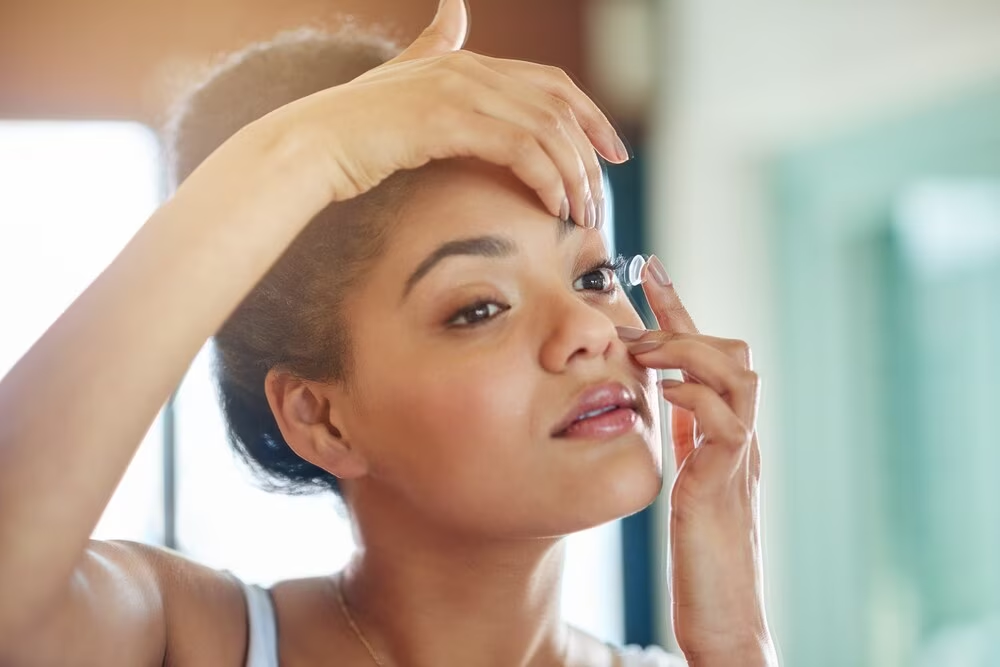
For convenience’s sake, many choose contact lenses over glasses. Eye lenses can become very heavy when you have a strong prescription. It becomes difficult to wear them all the time. Sometimes, for special occasions, coloured contact lenses are picked to create a statement look.
The doctor confirmed that, yes, children and teenagers can wear contacts as well, but prolonged or sleep-in wear should be avoided unless prescribed for a specific reason with a high level of supervision. But as much as there is ease to wear contact lenses, whether for improved vision with more convenience or for statement cosmetic reasons, hazards also exist. We asked an ophthalmologist some common doubts regarding contact lenses. Dr Supriya Sriganesh, executive director at Nethradhama Super Speciality Eye Hospital, weighed in to clarify when contact lenses can help with your vision and when they can be detrimental to your eye health . How safe is it to wear contact lenses? The doctor agreed it is safe if one follows necessary precautions, especially regarding hygiene. Since you are inserting the lens directly on the surface of your eyes, on the cornea, you need to be very careful. The wearability of contact lenses varies. Not everyone can easily tolerate contact lenses. Some can make themselves more vulnerable to eye infections. Here are some categories of vulnerable groups of people who should be careful, as per the doctor: Note to readers: This article is for informational purposes only and not a substitute for professional medical advice. Always seek the advice of your doctor with any questions about a medical condition.
Describing the guidelines for safe contact lens application, the doctor advised, “Wearing contact lenses is okay if one strictly follows the recommended hygiene guidelines, like washing hands thoroughly and drying before putting in lenses, only using the recommended contact lens solutions, replacing lens cases regularly, not sleeping or showering or swimming while wearing lenses unless explicitly advised, and so on. Unlike glasses, which are not in direct contact with the surface of your eyes, contact lenses sit directly on the cornea. If the lenses are not cleaned properly or the application process compromises on the hygiene factor, you may be vulnerable to infections. Dr Sriganesh listed these signs that mean your lenses are affecting your eye health: As a contact lens user, if you experience any of the above-mentioned signs, visit a doctor promptly and get your eyes checked. The ophthalmologist opined that these signs could signal a wide range of eye-related conditions, from corneal abrasions to serious conditions such as keratitis or ulceration, all of which can seriously harm vision if left untreated. If you or your loved one is experiencing the signs, the lens should be removed, and they should get their eyes checked immediately.
