
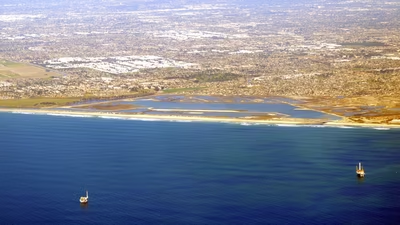
More than 10,000 birds have been counted in a single survey on the mudflats of Bolsa Chica, highlighting the wildlife activity supported by the return of tidal exchange. The Bolsa Chica Lowlands Restoration Project created or restored nearly 600 acres of marine and wetland habitat in Orange County, California, according to the California State Lands Commission . The project was constructed as mitigation for impacts from new terminal facilities at the Ports of Long Beach and Los Angeles, which contributed $101.4 million to the project in exchange for mitigation credits. The restoration included opening a tidal basin to the Pacific in 2006 and maintaining the ocean connection.
Above the wetlands, bird activity is equally lively. The Bolsa Chica wetlands are part of the Pacific Flyway and are used by migrating shorebirds, while the restored mudflats provide invertebrates that birds feed on. The inlet construction project also provided nesting habitat for western snowy plovers and California least terns, both endangered species. How the inlet was created is described in the article Bolsa Chica Wetlands Restoration Inlet Design by Weixia Jin and Michael McCarthy in Coastal Engineering.
The restoration site supports more than 159 bird species and includes 200 acres of salt marsh. The article describes Bolsa Chica as a roughly 1,200-acre relic wetland whose tidal connection was disrupted in 1899 when the Bolsa Chica Gun Club constructed a dam with tide gates across the marsh. In 1925, oil was discovered beneath Bolsa Chica, and the site subsequently became an active oil field.
The birds nested successfully at the wetlands, according to the monitoring report.
Maintenance of the inlet remains an ongoing task. Without ongoing removal, the inlet can close, affecting water quality, intertidal vegetation, and the food resources available to birds. The initial $15 million set aside for ongoing maintenance was considered inadequate to meet the project’s long-term needs, with the State Lands Commission describing Bolsa Chica as facing a critical funding deficiency. The commission lists about $3 million in annual management costs for the Bolsa Chica wetlands.
Waves and tides continually move sand into the basin, according to the California State Lands Commission.
