
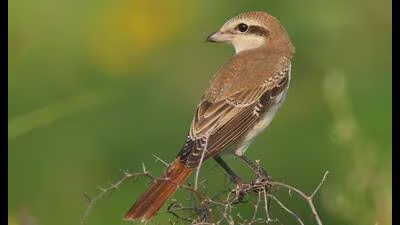
Two species of shrikes — the red-backed shrike and red-tailed shrike — have been recorded in Himachal Pradesh for the first time at Pong lake, one of the major stopover sites for migratory birds.
Their identities were later confirmed,” said Chaudhary, a dermatologist posted at Dharamshala zonal hospital. Both birds were found in scrubland around the lake. “Identifying the birds was challenging as both were immature. Several immature shrike species, including the isabelline shrike (Lanius isabellinus) which also migrates through the region during autumn, have similar plumage. The photographs of the birds were consequently sent to experts in India and abroad for verification. The red-backed shrike is a striking bird. The adult male has a reddish back, pale pinkish underparts and a grey head with a characteristic black mask through the eye. Females and young birds are browner above and show vermiculated plumage. The species breeds across much of Europe and eastwards to west-central Siberia and winters mainly in Africa. The near absence of records between these regions makes the Pong lake sightings particularly noteworthy, suggesting that the birds may be using a migration route through the north-western Himalaya that has received relatively little documentation. “Shrikes depend on open habitats such as grasslands and scrub, making their preservation around Pong lake important. Such habitats are increasingly threatened across India, where they are often treated as wastelands and converted for other uses. At Pong lake, cultivation and plantations are also reducing these areas. Protecting the remaining habitat is important not only for migratory species but also for the wider diversity of birds that use the Pong lake landscape,” he added.
Chaudhary, who has documented several species in the past, said the red-tailed shrike was first sighted on the morning of September 13, followed by the red-backed shrike on September 20.
He said that both species are primarily encountered in western India during autumn migration and are recorded only rarely in Ladakh.
