
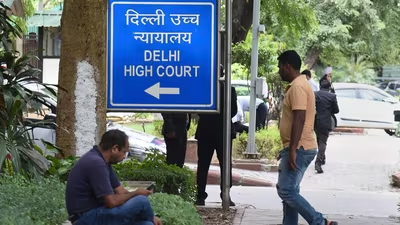
The fundamental right to travel abroad does not confer an unqualified right on an accused facing criminal proceedings to travel overseas at any time or for any duration, the Delhi high court has said.
“The right to travel abroad undoubtedly forms part of the personal liberty guaranteed under Article 21 of the Constitution.
However, the recognition of such right does not imply that an accused facing criminal proceedings has an unqualified right to travel abroad at any time and for a duration of his choice,” the court said.
The court was hearing a petition filed by a man accused in a CBI case, challenging a trial court’s order on September 9 that restricted him from filing another application to travel abroad for six months, except in exceptional and compelling circumstances. The CBI, however, defended the condition, saying it was necessary to ensure his presence during the trial. Consequently, the high court dismissed the petition, holding that the condition did not impose an absolute bar on foreign travel or extinguish the petitioner’s right to approach the court. “Pertinently, the impugned condition does not impose an absolute embargo upon the petitioner’s right to travel abroad. It regulates the manner in which a further request for such travel is to be considered during the stipulated period.
It said the restriction amounted only to a limited regulation for a specified period and was subject to an express exception for exceptional and compelling circumstances. The condition itself preserves the jurisdiction of the trial Court to consider a subsequent request where circumstances are shown to be exceptional and compelling,” the court said.
