
India has proposed a three-part Russia-Ukraine truce that would halt attacks on energy facilities and other infrastructure, keep grain and energy flowing through Black Sea ports, and end strikes on commercial shipping in the strategic waterway, people familiar with the proposal said.
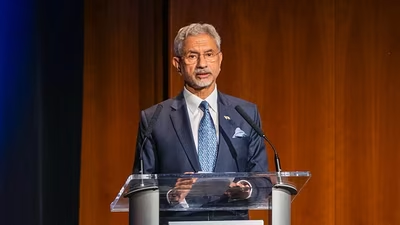
It was conveyed to the Ukrainian leadership during external affairs minister S Jaishankar ’s visit to Kyiv last month. Attacks on commercial shipping in the Black Sea have disrupted grain and, more significantly for India, energy supplies from Russia in recent weeks. The proposal figured in Jaishankar’s separate meetings with Ukrainian foreign minister Andrii Sybiha and President Volodymyr Zelensky during his September 3 visit to Kyiv, the first stand-alone trip to Ukraine by an Indian foreign minister.
The plan goes beyond separate ceasefire proposals from Egypt, Turkey and the US by seeking to cover both infrastructure and commercial shipping while keeping vital commodity flows open, the people said. Egypt and Turkey have focused on ensuring the unimpeded flow of grain from the Black Sea by suspending attacks on commercial shipping, while the US proposal has centred on an “energy ceasefire”, the people said. Sybiha told reporters in Kyiv on October 2 that Ukraine had received ceasefire proposals from India, Egypt, Turkey and the US, describing the Indian proposal as the “most comprehensive”. He said Ukraine was ready to consider different ceasefire formats, including along the front lines, but only if the truce covered attacks on energy and port infrastructure and the situation in the Black Sea. Speaking at the annual meeting of the Valdai Discussion Club in Moscow a day earlier, Russian President Vladimir Putin said Prime Minister Narendra Modi “has excellent ideas aimed at finding mutually acceptable…solutions”. He also said Modi maintained a neutral position while being committed to ending the conflict. The Indian proposal is aimed at ensuring the free flow of these commodities, they said.
Black Sea ports account for almost 30% of Russian energy flows to India. The Sanctioning Russia and Iran Act (SRIA), passed recently by the US Congress, is expected to take effect by mid-October, raising the prospect of tariffs of up to 100% on Indian goods over purchases of Russian energy. There is also a wider economic and diplomatic stake for New Delhi.
There has also been a drop in supplies and a spike in freight costs for Russian crude exports, particularly from the port of Novorossiysk, amid threats to merchant shipping, according to reports.
