
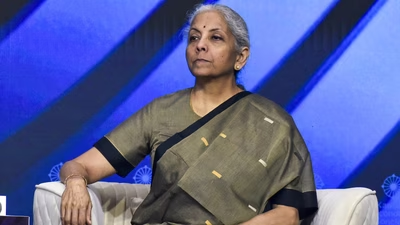
Trade negotiations between India and the US are “still ongoing” even as both sides have “reached a plateau” beyond which further give-and-take “might be very, very difficult,” Union finance minister Nirmala Sitharaman said on Monday, days after US Trade Representative Jamieson Greer said an agreement was “not imminent.”
Asked whether this would serve as a template for other negotiations, particularly with the US, Sitharaman said the India-US agreement “is yet to get finalised” and has been “a hard and very rigorously negotiated agreement”. “The agreement’s negotiations are still ongoing, although we’d like to believe that both the sides have reached a plateau, beyond which giving or taking might be very, very difficult,” she said. Sitharaman’s remarks came days after Greer said at a press conference following the G20 Trade Minister s ’ meeting in Milwaukee that he did not think there was “something imminent” on a trade deal with India. He said the two sides had identified “the universe of items” that were sticking points. Greer also said US President Donald Trump and Prime Minister Narendra Modi may have another phone call “very soon” to assess progress on the trade deal.
However, the agreement was not signed after the US Supreme Court invalidated the legal basis for the preferential tariff mechanism Washington had offered, the experts said. India is now awaiting a preferential tariff framework that provides competitive access for its exporters vis-a-vis competing countries, they added. The two countries had issued a joint statement on February 7 outlining a framework for an interim BTA.
Uncertainties created by Washington’s frequent trade measures and the use of tariffs as a negotiating tool are major hurdles to signing an interim bilateral trade agreement (BTA) , according to trade experts. Sitharaman also said the balance of bilateral trade between India and the US was in India’s favour and that Washington’s concerns over its trade deficit could be addressed through negotiations rather than the “weaponization” of tariffs.
