
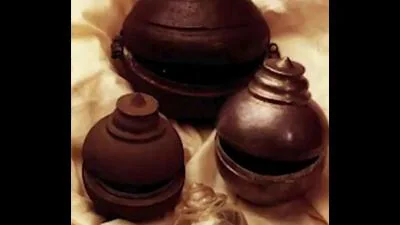
The collection, which has remained largely inaccessible since its discovery in 1882, includes a reliquary containing multiple nested caskets, gold flowers, Buddhist artefacts, coins and a group of bronze figures. MUMBAI: A hundred and forty-four years after they were excavated from the remains of an ancient Buddhist stupa at Mumbai’s Nalasopara, a remarkable collection of relics preserved in the archives of the Asiatic Society of Bombay will be shown to the public for the first time next year.
“It is likely to be held around Buddha Purnima in May 2027. The discoveries were made in 1882 by pioneering archaeologist Bhagvanlal Indraji, who was also associated with the Asiatic Society. “The stupa is believed to be at least 2,500 years old, while the Ashokan edict is approximately 2,300 years old. The silver coins are around 1,800 years old, and the bronze Buddhist images are estimated to be about 1,300 years old. The relics have been preserved at the Asiatic Society for nearly 144 years.
For the first time, visitors will be able to see a collection that connects Sopara’s ancient Buddhist traditions with its history as a major centre of trade on India’s western coast. Gold flowers of different types were found between the copper and silver caskets, along with a tiny gold plaque depicting Buddha with his hands making the Dharmachakra mudra. “Indraji studied Buddhist texts and inscriptions, traced the references to Sopara and documented his findings in a detailed report. As they are largely made of metal, they require regular preventive conservation: periodic cleaning, dusting and examination by archaeological and conservation experts for signs of deterioration. The Society is also planning something called a ‘Reading Together’ initiative. “A celebrity or well-known personality will come here and speak about a book they are currently reading, followed by a discussion in which other participants can talk about the books they are reading. Another proposed initiative is a conference of book collectors and critics. “We want to bring them together on a common platform where they can share their experiences.
“The exhibition of the Sopara Relics is the centrepiece of our wider effort to bring the Society’s historic collections closer to the public,” said Vinay Sahasrabuddhe, newly elected president of the Asiatic Society of Bombay. “Historically, the Asiatic Society of Bombay served as a central repository for antiquities discovered across the Bombay Presidency and the state,” said Suraj Pandit, a member of the Society’s managing committee. “Buddhist literature contains references to these relics being associated with Sopara,” said Pandit, a trained archaeologist and vice-principal of Sathaye College. “The antiquities preserved by the Society span several centuries,” said Pandit. “Our recent assessments have found the collection to be in good condition,” Pandit said. The idea is to strengthen the reading culture among people,” said Sahasrabuddhe. “There are many people who have a passion for collecting books, but their work and experiences often remain unknown and unrecognised,” said Sahasrabuddhe. Sahasrabuddhe said the Society was exploring a collaboration with Raj Bhavan (now renamed Lok Bhavan). “The governor is the patron of the Society, and on his suggestion, we will jointly organise an ‘Amchi Mumbai Sanskritik Mahotsav’,” he said. “It will be a literary festival with other cultural events, some held at Lok Bhavan and others at the Asiatic Society.”
