
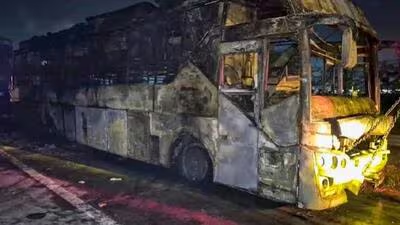
A three-day enforcement drive resulted in challans against 904 buses and the grounding of 257, officials said. The Uttar Pradesh transport department has intensified its crackdown on double-decker buses following the Supreme Court’s scrutiny of safety and regulatory compliance after the Greater Noida bus fire.
Its tourist permit had also expired. Inspectors found the bus being used to transport heavy material in addition to passengers. Two-wheelers, an engine and iron goods were found in its luggage compartment and on the roof. The vehicle was seized. The crackdown came as the Supreme Court sought details from the UP government on the regulatory history of the double-decker involved in the September Greater Noida fire, including its permit, fitness certificate, authorised passenger capacity, construction, fire-safety arrangements, emergency exits and violation history. Such vehicles obtain registration and certification from the transport authorities of the respective states before operating on UP routes. registration and fitness certification remain the responsibility of the state in which the vehicle is registered While UP enforcement teams can act when violations are detected within the state. The latest seizure follows several incidents in which inspections or accidents exposed overloading and unauthorised structural modifications. A seat was found blocking an emergency exit, while questions were raised over the bus’s permit and fitness certification. The bus had a regulatory trail involving different states for its registration, ownership, fitness and pollution-related documents. The Allahabad high court has also sought details regarding sleeper-bus permits, verification of safety standards before permits were issued, modifications to bus designs and checks at state borders and during night hours.
On Thursday (October 1), an enforcement team chased and intercepted a Delhi-Darbhanga-bound double-decker on Kisan Path. The bus, authorised to carry 31 passengers, was found carrying 76 people and had 58 additional seats installed in it. Department data shows that 26 of 36 major accidents involving double-decker buses between January and September this year involved vehicles registered outside UP, including those registered in Bihar, Rajasthan, Nagaland and Arunachal Pradesh. In February, a Haryana-registered double-decker travelling from Ludhiana to Darbhanga was found carrying around 85 passengers against an approved configuration of 32 seats and 16 sleeper berths. Inspectors found 33 sleeper berths and nine seats after structural modifications, with an additional seat blocking the rear emergency exit. The bus had accumulated 67 challans, including 18 pending ones. In May 2025, five passengers were killed after a double-decker caught fire on Kisan Path. On July 1 this year, a Lucknow-Delhi double-decker carrying 65 passengers collided with a container truck on the Yamuna Expressway in Mathura, killing four people and injuring 25. On August 13, a sleeper double-decker carrying around 73 pilgrims overturned in Lakhimpur Kheri, killing one person and injuring 38. The Supreme Court’s intervention followed the September 23-24 Greater Noida sleeper-bus fire that killed nine passengers. The department has cited central standards, including AIS-052, AIS-119 and AIS-135, governing bus-body construction and safety. Uttar Pradesh has 8,06,778 private buses, including 14,352 stage-carriage, 10,636 contract-carriage and 10,825 tourist buses, highlighting the scale of the enforcement challenge.
Officials said enforcement teams are examining whether the physical configuration of buses corresponds with their registration and fitness documents and whether modifications have been carried out in accordance with prescribed standards. Additional transport commissioner (Enforcement) KD Singh said a significant number of buses involved in serious accidents or found violating safety norms are registered outside Uttar Pradesh. Police said the conductor was driving the bus. It observed that there was “scope for improvement” in the transport department’s checking mechanism. Officials said the latest enforcement drive is focused on identifying overloaded, structurally modified and improperly permitted buses. Officials said buses built on chassis and subsequently customised must comply with prescribed standards and cannot be modified simply to increase passenger capacity.
