
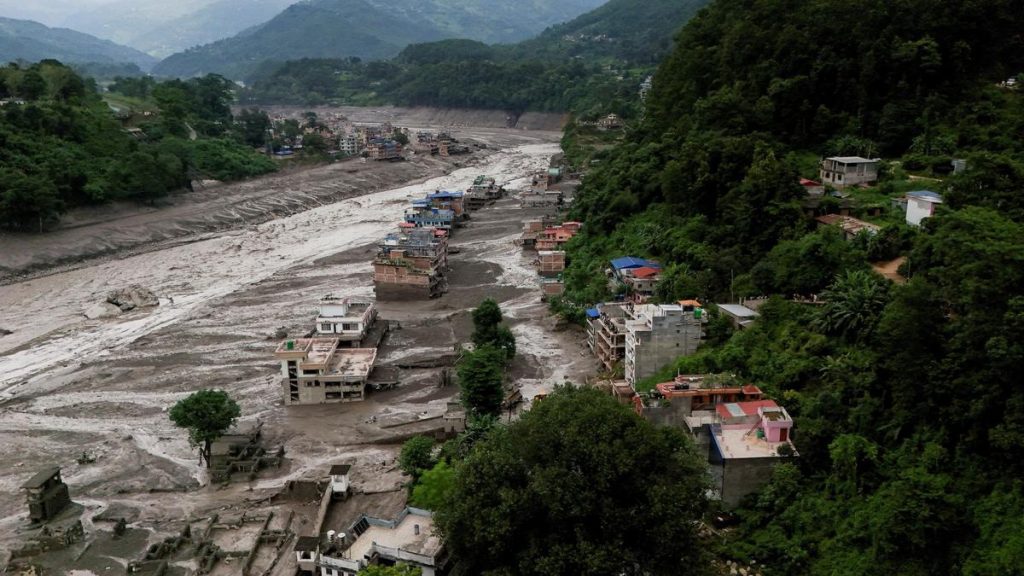
Nepal will kick off a high-stakes effort this fiscal year to drain four glacial lakes perched high in the mountains, as it scrambles to reduce flood risks, officials said, after a recent disaster that killed more than 1,400.
Design work and detailed studies targeting the central and eastern lakes of Thulagi, Lower Barun, Lumding Tsho and Hongu II, will begin in the fiscal year that runs until mid-July 2027, authorities said. The lakes, at heights ranging from 4,050 m to 5,483 m (13,280 ft to 18,000 ft), rank among Nepal’s most potentially dangerous, the United Nations Development Programme and the International Centre for Integrated Mountain Development (ICIMOD) said in a 2020 report. Nepal had the skills and experience required for the $50-million project to be funded by the Green Climate Fund, the UNDP and the government, added Tuladhar, of Nepal’s Centre for Hydrology and Water Resources Research. Nepal’s disaster served as a warning to the world, Prime Minister Balendra Shah, 36, told the United Nations in an impassioned speech last month that blamed climate change despite his country’s negligible emissions.
Canals will drain water into nearby rivers in a regulated way, he said, adding that workers faced health risks as a result of the lengthy periods of high-altitude work required, in addition to the dangers of sudden flooding.
“Our aim is to lower the risk of the lakes breaching their natural dams and reduce the risk of downstream floods,” said Subash Tuladhar, an expert with a government research centre tasked with overseeing the new project. The work of draining “through gated structures” will start after a detailed study, and could take up to six years to complete, said Sanjeeb Baral, the Centre’s executive director.
