
New Delhi
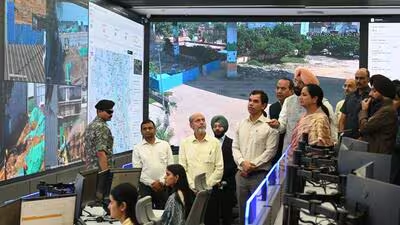
Chief minister Rekha Gupta inaugurated the centre at the Delhi Metro Rail Corporation’s IT Park in the Shastri Park area, as part of the Seva Sankalp campaign. The centre will integrate pollution-related data, public complaints and field inspection reports to facilitate action by the departments concerned. GPS-enabled vehicles will allow officials to track the movement of field teams and coordinate action against identified pollution hot spots. Citizens can submit suggestions, complaints and pollution-related concerns, as well as share information about initiatives to reduce pollution.
The Delhi government on Thursday launched an Integrated Command and Control Centre (ICCC) for the Delhi Pollution Control Committee (DPCC) to monitor pollution sources in real time, with AI-enabled CCTV cameras tracking more than 700 construction sites and GPS-enabled systems monitoring road sweeping, officials said. More than 700 construction sites, measuring over 500 square metres, are being monitored live through AI and CCTV cameras and the department and site owner concerned will be alerted immediately if the PM10 level rises, he said. The government will deploy 78 subdivisional teams for monitoring and enforcement this winter. Against a target of planting 7 million trees, 7.2 million have already been planted, and the campaign is continuing, he said.
“The core principle of the entire system is ‘Detect, Analyse, Act, Verify’,” Gupta said. Environment minister Manjinder Singh Sirsa said that the centre will function around the clock and serve as a war room during the pollution season. Gupta said the government was integrating technology with field monitoring to address pollution caused by road dust, open waste burning and construction activities. “Vayudoot” teams will identify polluting activities, and their body cameras will relay footage to the command centre, she said. The chief minister also launched the “Jan Suggestion” portal to encourage public participation in pollution control. Sirsa said the government aims to pre-empt severe curbs through public participation and sustained monitoring.
