
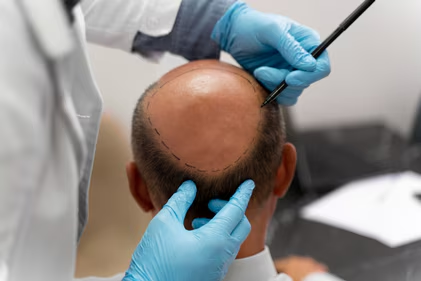
Hair loss is becoming an increasingly common concern among men in their 20s, with many considering hair transplants before reaching 30. Greater visibility on social media, evolving grooming preferences and the desire to tackle a receding hairline early have made the procedure more widely discussed and accessible.
However, choosing to undergo a transplant at a young age is not simply about whether the procedure can be done. The more important consideration is whether it is the right time to do it. “There is no universal age at which a hair transplant becomes appropriate. What matters more is the cause of hair loss, whether the pattern is established, how quickly it is progressing and whether the donor area has enough healthy hair to support the procedure,” she explains.
In an interview with HT Lifestyle, Dr Nandini Dadu – hair restoration specialist, aesthetic physician and GLP-1 coach at Dadu Medical Centre in Rajouri Garden and Vasant Vihar, New Delhi – points out that age by itself does not determine whether someone is suitable for a transplant.
Is hair transplant before 30 advisable?
One of the most important steps for a younger person experiencing hair loss is to establish the diagnosis first. Male-pattern hair loss, or androgenetic alopecia , typically causes gradual recession at the temples, thinning around the crown or progressive reduction in density. Temporary shedding can occur after significant stress, illness, fever, rapid weight loss, nutritional deficiencies or other triggers. This type of hair loss, known as telogen effluvium, may improve once the underlying trigger is addressed. The hair restoration specialist points out, “Someone who suddenly notices excessive hair fall should not assume that a transplant is the answer. If the shedding is temporary, transplanting hair does not address the actual problem. A proper scalp and hair assessment is important before making any surgical decision. For someone with progressive male-pattern hair loss, another consideration is whether the condition is continuing to advance. The aesthetic physician points out that a transplant redistributes existing donor hair to areas that have become thin or bald, but does not stop the underlying tendency to lose native hair. This becomes particularly important in younger patients. If transplantation is performed too early while surrounding hair continues to recede, a person could eventually develop an unnatural-looking pattern, with transplanted hair remaining in place while untreated native hair behind it becomes thinner. Dr Dadu advises younger patients to first work on controlling or stabilising ongoing hair loss where medically appropriate. “The goal should not be to create the lowest possible hairline at a young age. In selected individuals with a clearly established pattern of hair loss, a stable or appropriately managed condition, adequate donor density and realistic expectations, transplantation may be considered. A younger patient may have several decades of future hair loss ahead, and the available donor hair needs to be conserved. Dr Dadu adds, “A successful transplant is not just about how the hair looks immediately after surgery. It is about creating a natural result that continues to make sense as the person ages. Note to readers: This article is for informational purposes only and not a substitute for professional medical advice. Always seek the advice of your doctor with any questions about a medical condition. She practises at Dadu Medical Centre, with clinics in Rajouri Garden and Vasant Vihar, specialising in hair and aesthetic treatments and personalised approaches to hair restoration and wellness.
Being under 30 does not automatically rule out a hair transplant. Dr Nandini Dadu is a New Delhi-based hair restoration specialist, aesthetic physician and GLP-1 coach. Because the donor supply is finite,” she explains, hair restoration has to be planned with the future in mind. Because the hairline has started to recede can be counterproductive, however, rushing into surgery simply. For men under 30, therefore, the first step after noticing hair loss should be a proper evaluation rather than immediately booking a transplant.
However, according to Dr Dadu, not every person experiencing hair shedding has this condition. “Understanding why the hair is falling, whether the loss is temporary or progressive, and what the long-term pattern may look like can help determine whether surgery is appropriate – or whether treatment and monitoring should come first,” the hair restoration expert concludes.
