
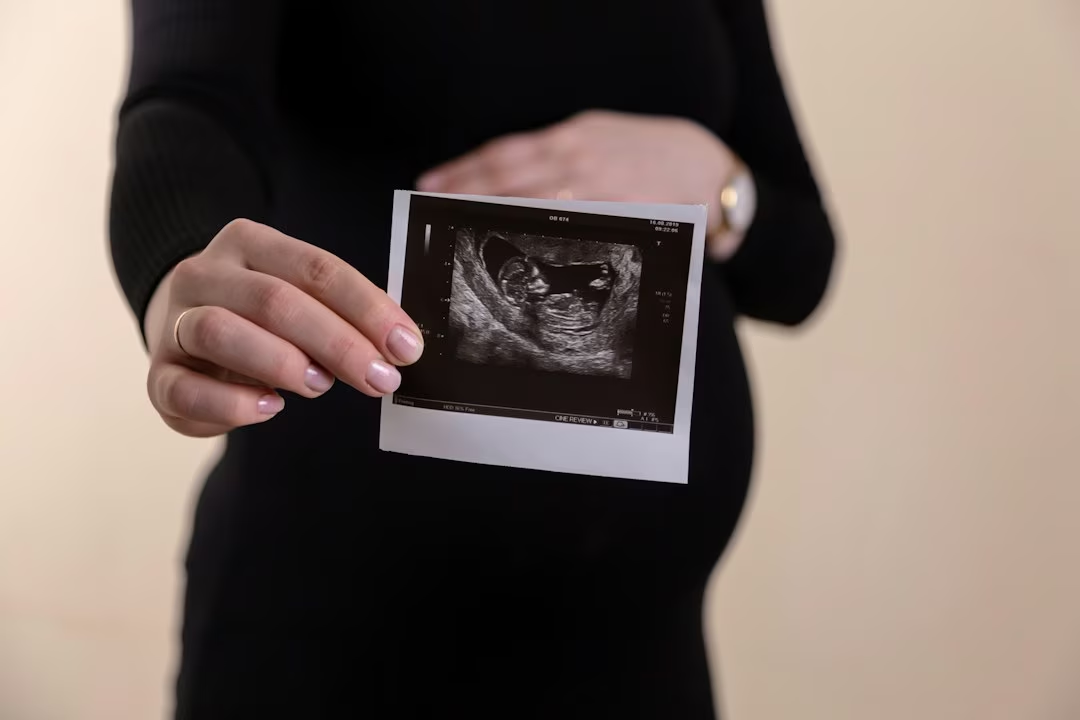
Being diagnosed with uterine fibroids does not necessarily mean a woman will have difficulty conceiving or carrying a pregnancy to term. Fibroids are non-cancerous growths that develop in or around the uterus, and while some types or locations may affect fertility or pregnancy, many women with fibroids go on to conceive and have healthy pregnancies.
HT Lifestyle reached out to Dr Shobha Gupta – the medical director and IVF consultant at Mother’s Lap IVF Centre, New Delhi and the founder of Mumma’s Blessing IVF and Birthing Paradise, Vrindavan – who highlights, “However, their effect on fertility depends largely on where the fibroid is located, how large it is and how many are present. “Fibroids should not be looked at simply as a yes-or-no fertility problem. A small fibroid that does not distort the uterine cavity may have little or no effect on conception, while a fibroid that projects into the cavity can interfere with implantation. The individual situation matters much more than the diagnosis alone,” she explains. Submucosal fibroids grow towards the inner cavity of the uterus and are more likely to affect implantation and fertility. Intramural fibroids develop within the muscular wall of the uterus, while subserosal fibroids grow towards the outer surface.
Fibroids are commonly classified according to their location.
Doctors generally consider whether a fibroid is distorting the uterine cavity, its size and number, symptoms such as heavy bleeding or pain, and whether there is a history of infertility or recurrent miscarriage. This is why an ultrasound, and sometimes more detailed imaging, is important before making decisions about pregnancy,” highlights Dr Gupta. Depending on their location and size, fibroids may interfere with the uterine environment or, in some cases, make implantation more difficult. They can also be associated with heavy menstrual bleeding, pelvic pressure or pain. However, finding a fibroid during a fertility evaluation does not necessarily mean it is the reason for infertility. A fertility specialist may assess the uterus along with ovulation, ovarian reserve, fallopian tubes and the male partner’s fertility before deciding on a treatment plan. Many pregnancies involving fibroids progress normally. However, depending on their size and location, some women may require closer monitoring. Fibroids can sometimes be associated with pain during pregnancy, changes in fibroid size, placental complications or an increased risk of certain pregnancy complications. “Once pregnancy occurs, the approach is usually one of monitoring rather than automatically intervening. We keep an eye on the fibroid as well as the baby’s growth, placental location and the woman’s symptoms. In selected cases, myomectomy, the surgical removal of fibroids, may be recommended. The timing of pregnancy after treatment also needs individual planning, as the uterus may require time to heal. Women undergoing IVF may similarly need an assessment of whether a fibroid could affect implantation before proceeding. Dr Gupta concludes, “Women with fibroids should ideally have a preconception consultation rather than making decisions based on the scan report alone. The goal is not to remove every fibroid, but to identify which ones are clinically significant and choose the safest path towards pregnancy. Note to readers: This article is for informational purposes only and not a substitute for professional medical advice. Always seek the advice of your doctor with any questions about a medical condition. Dr Shobha Gupta is a renowned infertility specialist and IVF consultant with qualifications including an MBBS from Lady Hardinge Medical College and specialised training in Assisted Reproductive Technology from Justus Liebig University, Germany. She serves as the Medical Director and CEO of Mother’s Lap IVF Centre.
Because the location is different, “Two women can have fibroids of a similar size but completely different fertility prospects. Dr Gupta notes, “Women trying to conceive should therefore avoid assuming that every fibroid needs to be removed. Because a fibroid has been detected,” stresses the gynaecologist, most importantly, women should not panic simply.
Not every fibroid requires treatment before pregnancy, according to the gynaecologist. Treatment before pregnancy may be considered when a fibroid significantly distorts the uterine cavity, causes substantial symptoms, is associated with repeated pregnancy loss or is considered likely to interfere with fertility treatment, according to Dr Gupta.
