
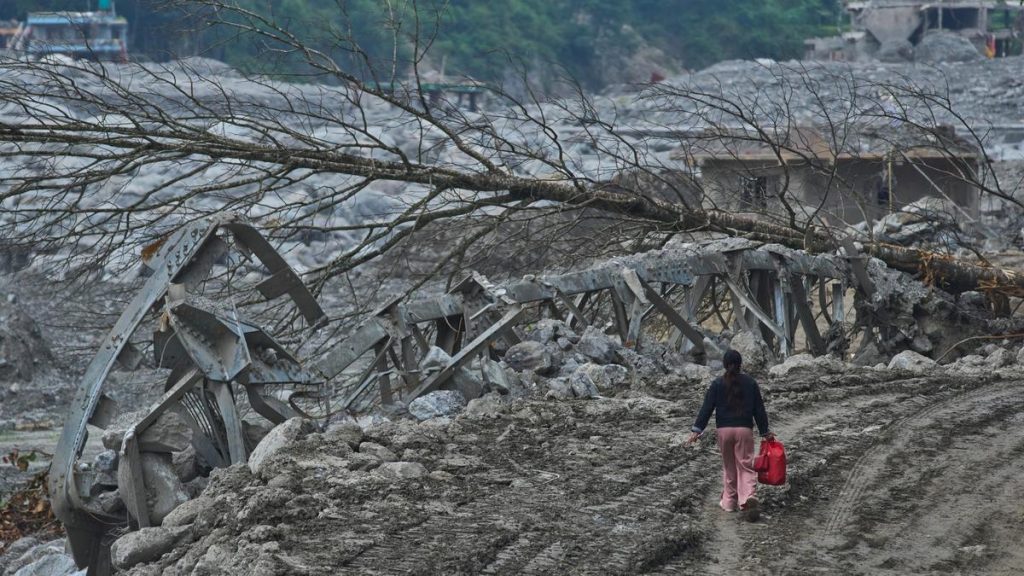
On August 26, floods hit Nepal’s Rasuwa, Nuwakot and Dhading districts, wiping away entire towns and communities. Roads and bridges were washed away, and telecommunications networks were down. The immediate focus was on rescuing people trapped under debris and providing relief to those affected. A month on, the focus has now shifted to rehabilitation, rebuilding and long-term recovery.
The government has a sense of moral responsibility [to save lives] when a disaster of this scale strikes. One common element is that the state acts decisively and with the speed required in the aftermath of such disasters. It mobilises its emergency forces, led by the security forces. However, we are increasingly seeing that the state’s response is not matched by a sustained commitment to long-term recovery and reconstruction. That responsibility starts to fade, particularly when it comes to listening to affected communities and ensuring that their rights are protected during the long-term recovery and reconstruction process. It is about transparency, engagement with the affected population and ensuring that they have a say in the recovery and reconstruction process. What do you mean by this? How do you balance the role of the local bodies and the federal government, especially when a massive disaster strikes a region, leaving the local communities wiped out? Mobilising military and security forces for disaster relief is a way of centralisation. We need to think beyond security forces for the immediate response and recovery. We need to engage more civilian actors for immediate relief and in policy-making. We should empower the local government with resources, equipment and infrastructure to deal with disasters. In the longer term, policy-wise, local bodies need to have a say in answering the big questions, like how we resettle communities. The problem is that, in Nepal and elsewhere, reconstruction tends to focus more on physical reconstruction, like building houses and other infrastructure. But they are often not aligned with community priorities. It also raises a deeper question: what does recovery mean? Is it just rebuilding houses, or is it a societal recovery? What if people don’t want to move from a certain place? How do we listen to their claims and choices? The local government can play a really important role here. There have also been questions about fairness and transparency in relief distribution. This is also about democracy and the responsiveness of State institutions, and whether they listen to these demands. ‘Teeth’ also means having the resources and ability to respond through concrete policy and programmatic interventions. It is important to have a conversation about the climate crisis, but we also need to examine what happened downstream. Did it do enough to protect the public? That is where a rights-based, more governance-centric approach to disasters comes in. It also involves a more social scientific approach to understanding disasters, rather than looking at them solely from the perspective of hazards and physical sciences.
Is there a difference between the way the government responded to the 2015 earthquake, the COVID pandemic and the recent flash floods? Be it the 2015 earthquake or the recent Rasuwa floods, bereaved families have demanded answers from the State about the way rescue and relief operations have been organised.
Your work suggests that disasters expose government failures that have built up, or existed long before the disaster itself. What was the government’s role before the disaster?
