
Uttar Pradesh may have received nearly 8% more rainfall than normal this monsoon from June to September 27, but the statewide surplus masks a striking agricultural divide, with 19 of the state’s 75 districts still recording deficient or scanty rainfall as the season draws to a close.
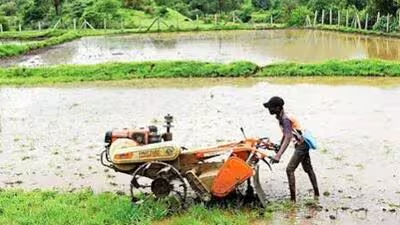
The uneven rainfall pattern comes at a crucial time for agriculture, with Kharif crops, particularly paddy, entering the harvesting phase. especially over the last three days, has raised concerns over waterlogging and damage to standing and mature crops, farmers in rainfall-deficient districts continue to face inadequate moisture availability While excessive rainfall in several districts. However, the aggregate figures conceal wide variations across districts. The contrasting rainfall pattern has different implications for agriculture across regions. In excess-rainfall districts, repeated spells of heavy rain towards the end of the season could complicate the harvesting and drying of mature paddy and other Kharif crops. In deficient districts, inadequate rainfall could affect soil moisture and increase dependence on irrigation.
The state has received 797.1 mm of rain against the normal 739.8 mm, a surplus of 7.7%, according to the latest rainfall data available with the agriculture department. As many as 26 districts have received more than 120% of their normal rainfall, while 19 have received less than 80%. Four districts — Shamli, Deoria, Ghaziabad and Kushinagar — have received less than 40% of their normal rainfall. Shamli in western UP has received just 31.8% of its normal rainfall, while Deoria in eastern UP has recorded 32%. Ghaziabad and Kushinagar have received 36.4% and 39.6%, respectively. The highly deficient belt, receiving more than 40% but up to 60% of normal rainfall, includes Bhadohi, Jaunpur, Kanpur Dehat, Hapur, Mau, Pilibhit, Aligarh and Mathura. Seven districts — Siddharth Nagar, Mainpuri, Gautam Buddha Nagar, Saharanpur, Kaushambi, Amethi and Sant Kabir Nagar — have received more than 60% but up to 80% of their normal rainfall.
The rainfall data, Gupta said, presents a paradox for the state’s agriculture — a monsoon that is surplus on paper but uneven on the ground.
