
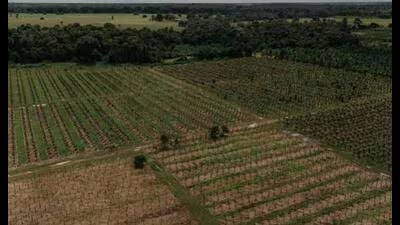
Residents of five Kandi-area villages have petitioned the Prime Minister, Punjab chief minister and chief justice of the Punjab and Haryana high court, seeking that land they say was delisted from the Punjab Land Preservation Act (PLPA) be recognised as agricultural land and released from the continuing restrictions imposed by the forest department.
The petition was submitted by the panchayats of the Kandi belt, including Gurha, Kasauli, Jayanti Majri, Bhaghindi and Karaundewal. The land was recorded in revenue documents (fards), under two forms: Abal Khewat, referring to the primary or first ownership account, and Khanakasht (Khana Kasht), referring to the cultivation or possession column. Villagers contend that the land recorded under the cultivation column was allotted to them under the applicable rules and has been used for agriculture for decades.
The sarpanch representing these villages said the land allotment process began in 1972-73, but appeals and subsequent proceedings delayed its finalisation until 1983-84.
They say the dispute has left villagers caught between revenue records showing their agricultural rights and restrictions on the ground that, according to them, continue to be enforced in the name of forest protection. They said their families and earlier generations were cultivating parts of the Kandi belt even before Partition.
The villagers have now sought formal recognition of such delisted parcels as agricultural land. The Punjab government enacted the PLPA in 1980. They also referred to minutes of a meeting chaired by the Punjab chief secretary on May 4, 2010, which, according to their representation, recorded that delisted land could be released and should not remain under forest department control. Mohali, the habitation and cultivation areas in the Kandi belt were identified and delisted from Section 4 of the Punjab Land Preservation Act (PLPA) through notifications issued during 2010–11, following approval of the Centre under the Forest (Conservation) Act, 1980, according to the Forest Department.
Cultivable parcels were subsequently delisted from the Act following court proceedings, subject to conditions, according to the representation. The department said the delisting was subject to certain conditions, including a restriction on commercial activity, and these conditions continue to apply.
