
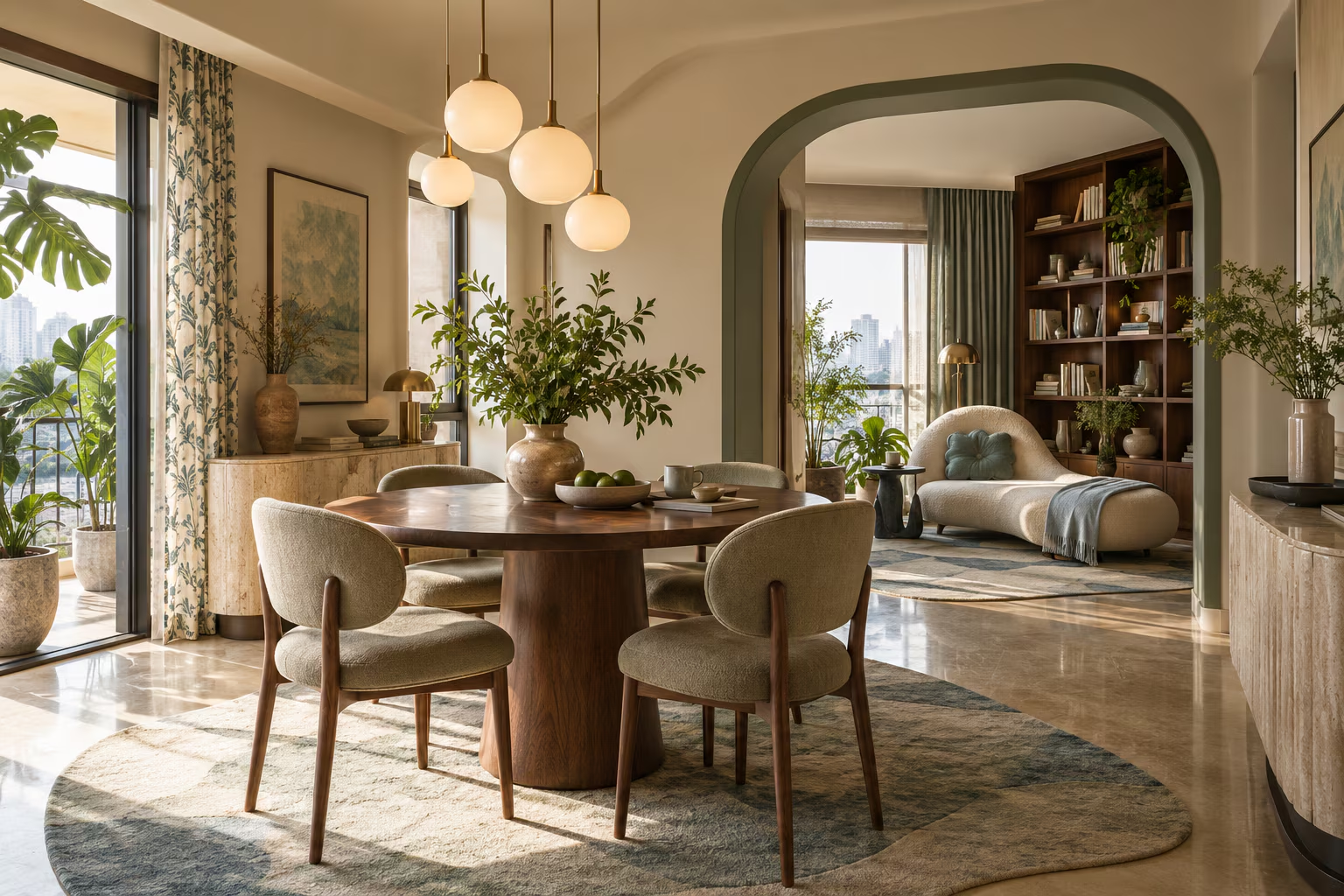
Shapes can influence how a room feels. Sharp edges, boxy corners, and angular, sculptural lights can give a space a polished look, but they may also make it feel cold and serious. To bring in warmth, try softer shapes: curved furniture, rounded corners, and gentle transitions between surfaces that can make a room feel welcoming and comfortable.
“Hard edges photograph well, but they rarely feel like home. The rooms that make us want to linger, the ones that feel calm the moment we walk in, tend to lean on soft geometry: curved silhouettes, rounded corners, and gentle transitions between forms. Here are her recommendations: A rectangular sofa with squared arms reads as efficient, not welcoming. Swapping in a curved back sofa, a rounded ottoman, or an armchair with soft bolster arms immediately relaxes a room. Curves diffuse light across a gradient instead of bouncing it off in one hard line, softening shadows even under the same lighting. Pendant lights, sconces, and lamp shades are an easy place to introduce curvature without committing to new furniture. A sphere or dome pendant scatters light more evenly than an angular fixture, casting soft pools instead of sharp cones. Paper or fabric shades turn the fixture itself into a glowing soft-edged form. An arched doorway, niche, or mirror frame does more for a room’s warmth than almost any paint color. Arches slow the eye down instead of letting it snap to a corner and stop. Even a small arched mirror or curved shelf niche can soften an otherwise boxy hallway. Rounded rugs, scalloped edge throw pillows, and textiles with wavy or biomorphic patterns break up the grid formed by walls, windows, and floorboards. One of the fastest, lowest-cost ways to soften a space that already has hard architectural bones. Look at where two hard surfaces meet, such as a countertop and backsplash or a floor and wall. Choose rounded countertop corners, bullnose edges or curved skirting boards to soften those joins. These details make the transition feel gentler and the room more inviting. In the end, the expert advised that soft geometry isn’t about eliminating structure; it’s about rounding the places where structure meets the people living in it. Start with one or two changes, live with them for a week, and notice how much more the room invites you to stay.
Riya Garg, founder of Rya Interiors, told HT Lifestyle that while sharp edges can look harsh in photographs, softer shapes often feel more welcoming. At rya° interiors, we treat softened shapes as a warmth tool, not just a style trend,” she said.
