
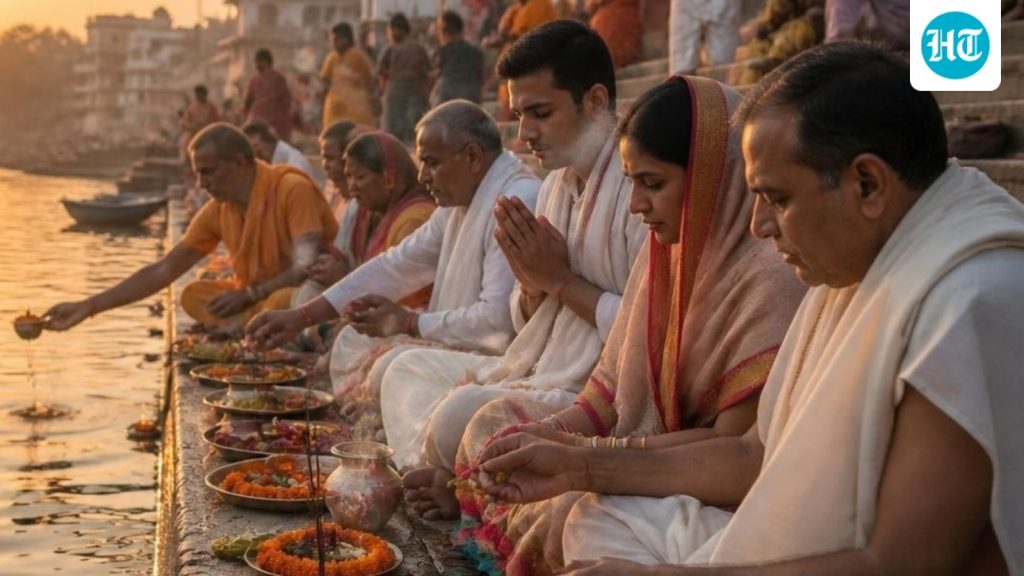
Pitru Paksha, also known as Shraddha Paksha or Mahalaya Paksha, is a 15-day period in the Hindu Alamanac, when Hindus honour their ancestors through prayers, food offerings, Tarpan and Shraddha rituals.
Drik Panchang lists daily Shraddha dates from Pratipada through Amavasya. The main ritual period generally includes Kutup Muhurat, Rohina Muhurat and Aparahna Kaal. During Pitru Paksha, families remember and honour deceased ancestors. You can perform Shraddha on the Tithi connected with an ancestor’s death. If you do not know the death Tithi, you can perform a collective Shraddha on Sarva Pitru Amavasya. The spiritual focus centres on gratitude, remembrance and respect for your family lineage. Different regions also follow different customs. Like in Bengal, Odisha and Assam, Tarpan with water and sesame seeds forms an important part of ancestral remembrance.
The period begins after Bhadrapada Purnima Shraddha on September 26. Pitru Paksha lasts for 15 days starting on the day of Purnima and ends on the day of Amavasya, according to Drik Panchang. Pitru Paksha Start Date : September 27, 2026 Sarva Pitru End Date: October 10 During these 15 days, you can perform Shraddha on the lunar date, or Tithi, associated with an ancestor’s death. Drik Panchang lists Kutup Muhurat from 11:58 AM to 12:46 PM on September 27 for Kukshi, Madhya Pradesh.
Most importantly, check the correct Tithi and local muhurat before performing Shraddha. You should also avoid treating the period as a casual ritual. Pitru Paksha carries a specific spiritual purpose, which is to remember your ancestors and honour family traditions. Traditional Shraddha includes several practices to honour your ancestors: Tarpan : Offer water with black sesame and other prescribed ingredients. Food offerings : Prepare food and offer it as part of the Shraddha ceremony. Brahmin Bhoj: Feed a Brahmin as part of the traditional Shraddha ceremony. Prayer and remembrance: Spend time remembering your ancestors and expressing gratitude. Hindu traditions connect Shraddha with devotion, respect and offerings made for ancestors. You can perform a collective Shraddha for known and unknown ancestors on this day, particularly when you do not know the exact death Tithi.
Also Read Pitru Paksha 2026: 10 lesser-known rules you should know before performing Shraddha, Tarpan and ancestor rituals Customs can differ between families and regions, so follow the practices prescribed by your family tradition or priest. Also Read Pitru Paksha 2026: Tarpan rituals, dates, timings and how to offer water to your ancestors Pitru Paksha provides a dedicated period to remember those who came before you. Sarva Pitru Amavasya on October 10 holds special importance, according to traditional believers.
Pinda Daan: Offer pindas prepared according to your family tradition. Charity: Donate food, clothes or useful items according to your customs.
For many families, the 15-day period becomes a time to pause, remember their roots and express gratitude. The rituals can also help pass family traditions and stories from one generation to the next. Disclaimer:This article is for informational purposes only. Readers should consult a qualified priest or religious expert for guidance on performing these rituals.
