
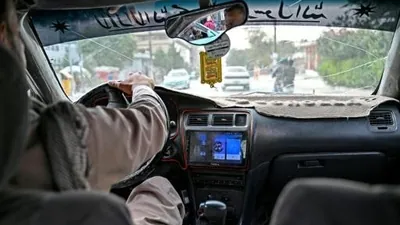
Since the Taliban returned to power in 2021, public venues have been limited to religious or patriotic songs approved by the authorities. For more than five years, the music that once echoed through restaurants, cafes and shops across Kabul has largely disappeared.
The 32-year-old has been stopped twice at checkpoints for having a USB stick and a memory card. But some Afghan taxi drivers are quietly pushing back against the restrictions, playing music in their cars despite the ban.
They risk being stopped by morality police, but for drivers like Roeen, listening to music is a “form of protest”, AFP reported. “At every checkpoint we pass, we lower the volume of the music or even turn it off completely… so I don’t get into trouble with them,” Roeen, who gave only his first name for security reasons, told AFP. Roeen, 28, said PVPV officials wield “a lot of authority”, making drivers wary of playing music openly. “We’re definitely too afraid of them to be able to listen to music at a higher volume,” he told AFP from his sky-blue-and-white taxi. As he navigates Kabul’s congested and noisy streets, Roeen said the restrictions have only deepened his appreciation for music. “I have to make sure that even if I can’t listen in the early morning, by eight o’clock my music is on,” he said. “I didn’t lie — I said it has music, and they broke it,” he said. “I prefer to listen to music every day; whenever I go to any destination, I try to check if the taxi has a music player,” said the 29-year-old. “I prefer music in the car, because wearing headphones would be noticed, but in the car, even with lower volume is better than nothing,” Ahmad said.
