
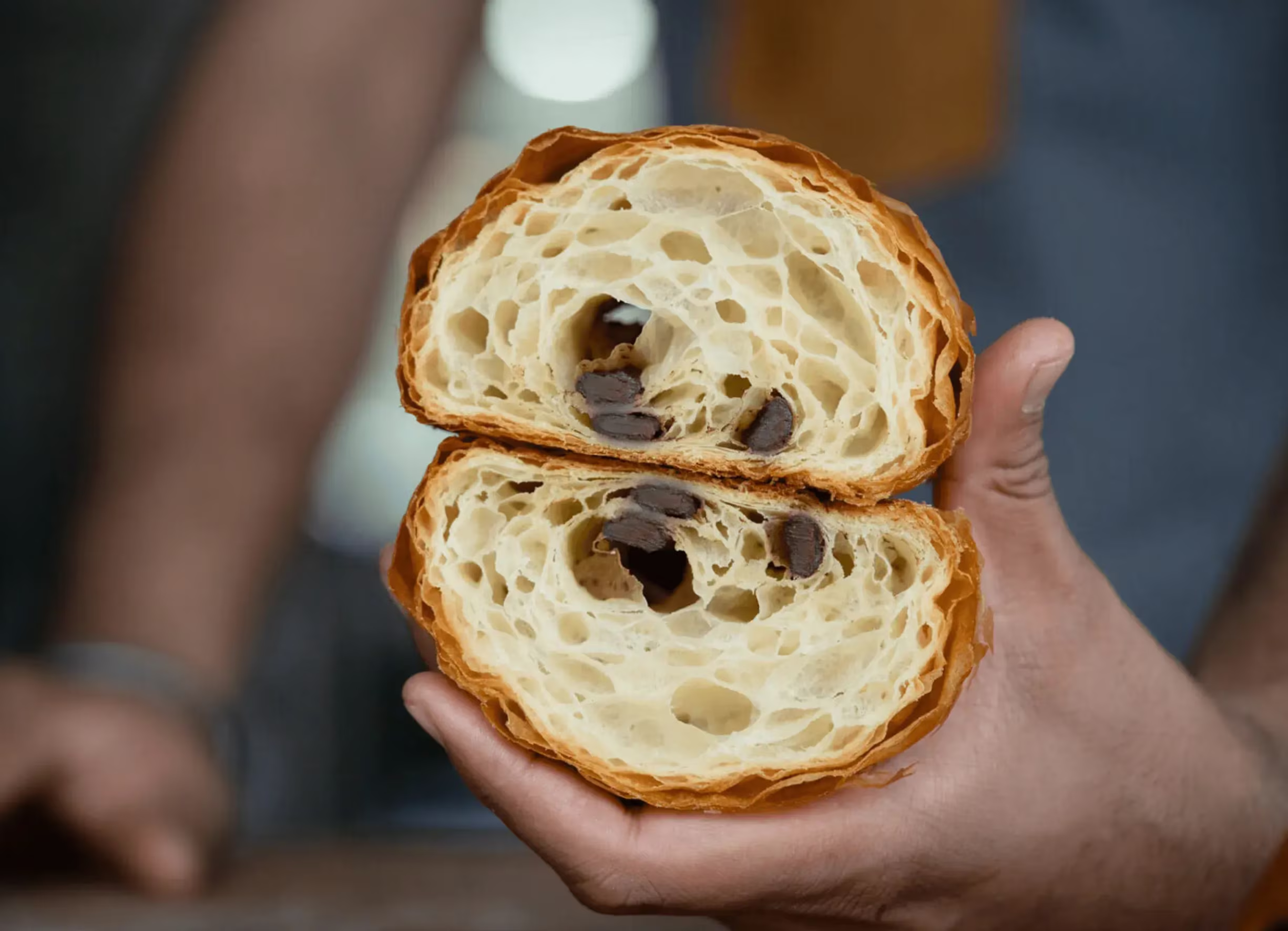
It’s such a relief to finally be able to get good bread in India. The rise in bread quality is one of the great undocumented success stories of India’s food scene.
Until the beginning of this century (and perhaps even later), bread was broadly divided into two categories. There was mass-produced bread that was relatively cheap and dominated the market. And then there was the fancy bread from five-star hotels, which cost a lot more and was passed off as vastly superior in quality to the industrial stuff. (I refer to Western-style bread. Pao is another, more complicated story). The so called five-star bread should have been better; it was at least three times the price. But mostly it was (and still is) as bad if not worse. For a start, the hotels did not hire good bakers. And the ones they hired also used Chorleywood-type shortcuts, relying on chemical-heavy products with such names as Bread Improver or Dough Conditioner. When you bought bread at a five-star hotel, you usually got the same chemically enhanced bread as the mass-produced version. Price was the only difference. Five-star bread was such a con that even the so-called brown bread was a forgery. They used the same dough that they would make their white bread with, and coloured it brown by using a caramel colour. This is so good’? I thought not.) We eat his bread at my home – two different kinds of sourdough and multigrain loaves – and it is always good, even though it is half the price of five-star hotel bread. (L’Opera is more famous for its macarons and I am partial to its French-style crème caramels.) I asked Vinesh Johny, the founder of Lavonne, how he managed to make such good bread in a market that has traditionally valued mediocrity. Vinesh was modest enough to say that making good bread was relatively easy. If you cook Indian food, for instance, you have to cope with variations in the flavour of ingredients: Chillies may be hotter one day, tomatoes may be less sour etc. You only need a few ingredients and they usually taste the same from day to day. What he did not say is that his bread is made with patience, effort and top notch ingredients. His flour is milled at a mill that is carefully chosen. For his croissants, he uses very good butter. Vinesh agreed with me that the bread market in India has changed. Perhaps it was the pandemic, he suggested, when so many of us started baking bread at home that made people realise what real bread should be like.
Because of the ubiquity of their loaves, it was easily available, and such companies as Britannia became household names.
It’s just expensive. (Have you ever eaten a toast at a hotel and said ‘Wow! With bread, he said, it’s easy. Even today, there are very few hotels where the bread is any good.
