
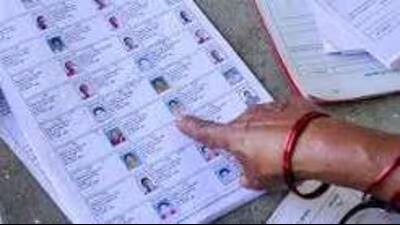
As the UT administration on Tuesday released the final electoral roll, the electorate increased from 4,50,282 in the draft electoral roll to 4,60,209 in the final roll, representing a net increase of nearly 2%. There is an increase of 9,927 electors as 15,117 electors were included and 5,190 electors were deleted in the final electoral roll. The final electoral roll comprises 2,34,516 male, 2,25,671 female and 22 third-gender electors.
In accordance with the instructions of the election commission of India, the Special Intensive Revision (SIR) of electoral rolls, 2026 was undertaken in the UT from June 5. The total number of electors as on July 15 2026, prior to the commencement of the enumeration phase, was 5,16,427 comprising 2,63,724 male, 2,52,677 female and 26 third-gender electors. Enumeration forms were generated and printed for all 5 lakh electors and distributed through the BLOs. Out of these, 4,50,282 enumeration forms were received back from the electors, while 66,145 electors’ forms were not received back were excluded from the draft electoral roll.The list of those electors’ enumeration forms which were not received back was published, indicating the probable causes as absent, shifted, death, duplicate and others. The breakup comprised 12,567 absent, 43,725 shifted, 3,535 death, 2,590 duplicate and 3,728 as others. The draft electoral roll was published on July 21 with a total of 4,50,000 electors. Out of the total electors in the draft roll, 3,80,821 electors were mapped as self or progeny, while 69,461 electors remained unmapped. The mapping included 1,67,406 self-mapped and 2,13,415 progeny-mapped electors. More than 1-lakh notices served During the notice phase from July 21 to September 18, notices were served to 1,38,000 electors, including 69,500 unmapped electors and 68,700 electors having logical discrepancies. Out of the 4,50,282 electors in the draft electoral roll, documents of 4,644 electors were found inadmissible/unsatisfactory, or absent or found dead, shifted or repeated during the hearing process, were marked as ineligible by passing speaking orders. A total of 17,891 claims and objections filed during the claims and objections period from July 21 to August 20 were processed for preparation of the final electoral roll. All forms received prior to July 21 were also processed for final publication. The final electoral roll of the special summary revision relating to service voters, with reference to July 1 2026 as the qualifying date, was also published on Tuesday. The total number of service electors enrolled in the final is 709. How to update particulars in electoral roll Applications for inclusion of name through Form-6, correction or shifting through Form-8, and deletion through Form-7, wherever applicable, may be submitted through the prescribed online or offline modes. For election-related information or clarification, the public may contact the toll-free voter helpline 1950. CEO Puri added that even now if someone’s name hasn’t been added then they can file an appeal before the SEO or DEO under Section 24.
The final electoral roll is also available for download on the official website of the chief electoral officer, Chandigarh at https://ceochandigarh.gov.in. Decisions in respect of the unmapped electors and logical discrepancies were taken by the concerned EROs/AEROs after conducting hearings and verifying the documents submitted by the electors and undertakings submitted by the BLOs. The final copies along with a soft copy of the final photo electoral rolls without photographs, have been handed over to the representatives of recognised political parties. Some additions can still be made even after this list is published. MP questions deletion of voters
UT district election officer Nishant Kumar Yadav said that even ward wise, there had been an overall increase and the deletions were also not done in one particular ward or area and but uniformly. Prerna Puri, chief electoral officer, UT, Chandigarh, said that the final photo electoral rolls are available for verification at the offices of the electoral registration officers (EROs), assistant electoral registration officers (AEROs) and with the booth level officers (BLOs).
