
Your mind can feel crowded even when your surroundings are quiet. Notifications, constant information, social media and the pressure to keep consuming can leave little room to pause. Over time, you may find yourself feeling distracted, mentally tired or unable to sit with your own thoughts without reaching for another source of stimulation.
You do not always need another technique to find quiet. Sometimes, stepping away from constant stimulation can be enough to change the pace of your mind. Osho often pointed to the simple experience of sitting quietly under a tree, watching nature and doing nothing for a while. There is no need to turn the moment into a task or achieve a particular outcome. Try sitting outdoors without your phone for a few minutes. Watch the movement of the leaves, listen to the sounds around you and allow your attention to settle naturally. Nature does not demand that you keep up. It gives you a chance to slow down. Another way to move away from mental noise is to create something rather than constantly taking in more information. You do not have to be a professional artist or produce something extraordinary. Paint, sing, dance, write, cook or garden. The activity itself matters less than the awareness you bring to it. When you become fully involved in what you are doing, you may spend less time jumping between thoughts, notifications and distractions. Through meditation, time in nature, and creative activity, you can make space for a quieter state of mind and reconnect with a sense of stillness amid everyday life.
Osho spoke about creativity as “creative quietude”, describing a state where there may be intense activity on the surface, while there is a sense of stillness within.
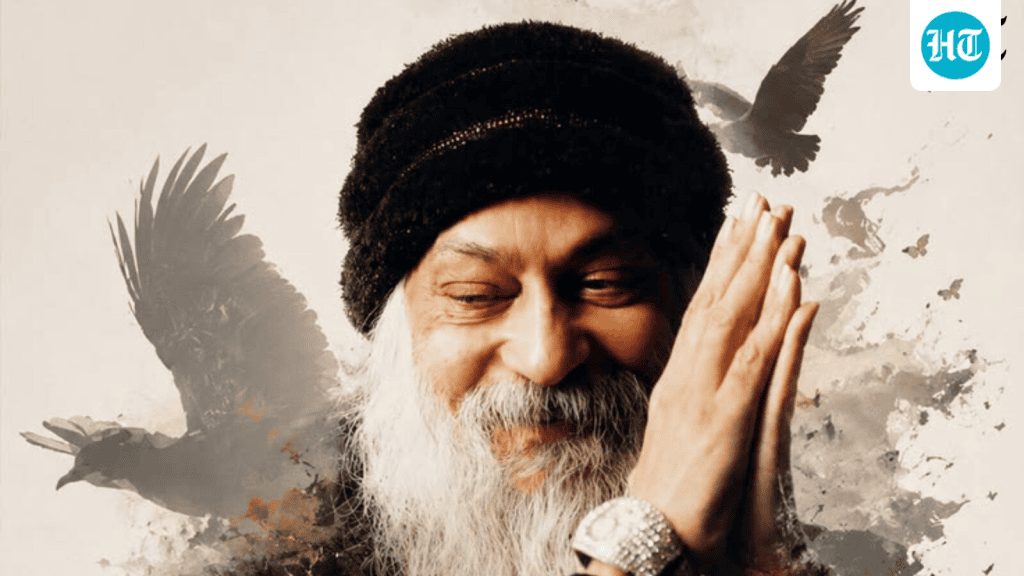
Osho , the Indian spiritual teacher known for his teachings on meditation, awareness and inner freedom, often spoke about the importance of finding silence within. Rather than seeing silence as something you have to force, his approach suggests that you can create the space for it by changing how you relate to your thoughts and everyday experiences. The idea is not necessarily to fight your thoughts or force your mind to become blank. Instead, you learn to observe what is happening within you without becoming caught up in it. His meditation methods include Dynamic Meditation, Kundalini Meditation, Nataraj and Nadabrahma, as well as practices such as Vipassana. Each offers a different way of developing awareness and stillness. The focus, however, is not simply on how long you meditate. It is about how completely you give yourself to the practice. Even a short period of genuine attention can become a way to step back from the constant noise in your head. Disclaimer: Osho’s teachings and meditation practices are presented here as spiritual perspectives and are not scientifically proven methods for creating inner silence. This article is intended for informational and reflective purposes and should not replace professional mental health or medical advice.
He breathed his last on January 19, 1990, in Pune, Maharashtra, at the age of 58.
A meditation facilitator at Osho Dham, here are three ways, inspired by Osho’s teachings, to help you reconnect with inner stillness, according to Ma Dhyan Prachi. Osho described meditation as a state of “no-mind”, in which the constant movement of thoughts, desires and memories begins to settle.
