
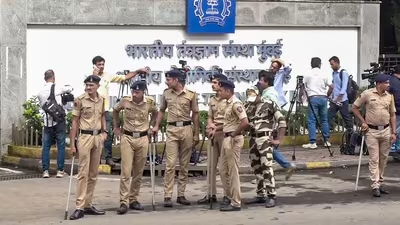
The situation at the Indian Institute of Technology Bombay (IIT-B) remained tense on Tuesday as students continued their protest following the death by suicide of a second-year undergraduate student on the campus on September 18. What began with questions over an incident during a mid-semester examination has now turned into a larger protest over the institute’s examination procedures, disciplinary action, student welfare and the handling of the case.
Students have continued to raise questions over what happened during and after the examination and have demanded an independent third-party inquiry into the circumstances surrounding the student’s death. They have also questioned the process followed after the student was allegedly caught using a mobile phone during the examination. The students have made it clear that their protest is not in support of cheating or academic malpractice. The protest has been continuing for several days on the IIT Bombay campus. Students have gathered at the main gate and have also held candlelight protests. The administration held an open house with students after the protests continued. During the meeting, several concerns raised by students were discussed. The students have also submitted a list of demands, including an independent investigation into the incident and changes in the process followed in cases of alleged examination malpractice. Students are now asking questions about the institute’s disciplinary system, student welfare and whether students facing academic or disciplinary action receive adequate support.
After an open house with the institute administration on Monday, a group of around 40 students continued to sit at the main gate. The protests have therefore moved beyond the immediate examination incident.
Their concern, they said, is about the process followed by the institute after the examination incident and the circumstances that followed. They said they would continue their protest until action is taken against Professor Suryanarayana Doolla. They said that the circumstances surrounding the student’s death should be examined through due process and that responsibility should not be fixed before the inquiry is completed.
Faculty members also highlighted Doolla’s earlier contribution to student welfare during his administrative responsibilities at the institute.
