
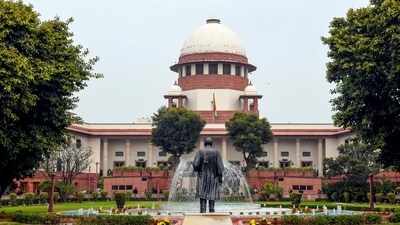
The Supreme Court on Monday barred investigating agencies from re-arresting an accused on their own after his arrest has been declared illegal for violating the constitutional right to be informed of the grounds of arrest, holding that any fresh arrest in such a situation must have the prior judicial imprimatur of a court.
A magistrate released him after finding that written grounds of arrest had not been furnished. The Supreme Court also directed that the investigation be handed over to another police officer once the superior authority receives the application seeking endorsement for re-arrest. A departmental inquiry must simultaneously be initiated into the original violation. If the inquiry ends in an adverse finding, departmental action must follow, with an entry made in the erring officer’s service record. The judgment is significant for preserving personal liberty and reinforcing the rule of law, by ensuring that a constitutional violation by the police cannot itself become the basis for an unchecked second exercise of the power of arrest. The court has effectively placed a judicial checkpoint between an unconstitutional first arrest and any subsequent attempt to deprive the accused of liberty.
A bench of justices Ujjal Bhuyan and Atul Chandurkar laid down a detailed procedure to prevent the police from abusing the power of re-arrest after having themselves breached Article 22(1) of the Constitution. The case arose from the arrest of Jaskaran Jeet Singh Deol, who was arrested in Punjab in May 2026 in a case involving allegations of sexual assault of a minor.
The court said that the investigating agency must first furnish the accused the grounds of arrest in writing and then move the jurisdictional Magistrate with an application explaining why the grounds were not furnished at the first instance and why his custody is now necessary. The application must carry the endorsement of the immediate superior police officer, the bench said, making it clear that the power to re-arrest cannot remain with the very authority that had violated the accused’s fundamental right .
The investigating agency subsequently sought to retain the possibility of taking him back into custody, leading to the constitutional question before the Supreme Court.
The judgment builds on the Supreme Court’s 2025 ruling in Mihir Rajesh Shah, which had directed investigating agencies seeking fresh custody of an accused released for failure to furnish grounds of arrest to approach the Magistrate.
The present bench said it was strengthening those safeguards by prescribing the requirement of a superior officer’s endorsement, transfer of investigation and departmental inquiry.
