
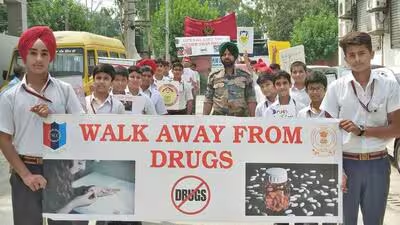
Punjab’s struggle against drugs is neither imaginary nor unique. Substance dependence troubles many Indian states, although the drugs consumed, their routes of supply, and the severity of their impact differ. Repeated political promises to eliminate drugs have also raised public expectations.
Because opioid dependence, organised trafficking, cross-border smuggling, pharmaceutical misuse and deepening social distress have converged, in Punjab, the problem appears especially acute. Every overdose, seizure and arrest is therefore seen as a test of the government’s resolve and credibility.
The crisis must therefore be understood not only as a law-and-order problem, but also as a public-health, mental-health and social-development challenge. Because fear, exhaustion and social shame often delay treatment, families also need guidance. Nor is supply the entire story. Addiction is often linked to unemployment, uncertain livelihoods, psychological distress, family disruption and a lack of meaningful opportunities. For some young people, drugs offer temporary escape from disappointment, anxiety or a diminished sense of purpose. In every hotspot, intelligence-led policing should target suppliers, financiers and repeat offenders. At the same time, health teams must identify dependent persons, offer evidence-based treatment and support their families. Schools, panchayats, municipal bodies, religious institutions, sports organisations and credible community groups should reinforce prevention without publicly identifying individuals or stigmatising entire communities. Being declared a hotspot should bring additional attention, protection and services—not collective suspicion. Treatment cannot end with detoxification. Substance-use disorder is frequently chronic and relapse-prone. Patients may require clinical assessment, medication-assisted treatment where medically appropriate, psychiatric care, counselling and continuing community support. Punjab’s network of outpatient opioid-assisted treatment clinics and de-addiction centres provides a valuable foundation, but its staffing, quality, accessibility and outcomes require independent evaluation. Registrations indicate activity; treatment retention and sustained recovery demonstrate effectiveness. No state can defeat organised trafficking in isolation. Punjab needs structured operational cooperation with neighbouring states and Union Territories, as well as national agencies. Intelligence concerning suppliers, pharmaceutical diversion, transport corridors, prisons, digital payments and cross-border networks must move across jurisdictions in real time. The Union and State governments should treat such cooperation as a shared responsibility, insulated from political differences. It needs one integrated mission connecting enforcement, treatment, mental healthcare, education, employment and community action. Progress must be measured through reduced availability, fewer overdoses, higher treatment retention, lower relapse, successful prosecution of major traffickers, and the return of affected persons to productive life.
Punjab does not need another slogan to replace earlier slogans.
