
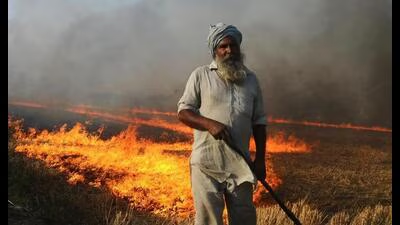
Punjab has drawn up a comprehensive five-year long-term plan to achieve ‘zero’ stubble burning by 2030, with the state government submitting the roadmap to the Commission for Air Quality Management (CAQM) and proposing measures ranging from crop diversification and next-generation crop residue management machinery to biomass industrial parks and permanent stubble storage depots across the state.
A senior state functionary familiar with the matter said the long-term plan aims to structurally transform Punjab’s stubble management ecosystem through diversified agriculture, expanded industrial utilisation, and permanent supply-chain infrastructure.
The targets for in-situ and ex-situ management, as mentioned in the plan, shall be achieved with the collaborative support of all the stakeholders, ministries, departments and concerned agencies. “There has been a significant reduction in the stubble burning events in the state during the year 2025 as compared to the years 2023 and 2024. For in-situ management, the plan aims to reach sustained availability of crop residue machines (CRM) by 2030, with respect to the area under paddy. At present, 10.15 lakh tonnes of straw is being integrated into soil using 1,58,898 subsidised machines, according to the plan. For ex-situ management, the government aims to develop biomass industrial parks with common boilers, and set up compressed biogas (CBG) plants for the use of 10-12 lakh tonnes of paddy straw within three to five years.
In order to strengthen these efforts, the policy interventions and financial support by the central government are imperative, especially in the provision of viability gap funding for biomass power plants and addressing impediments faced by the upcoming compressed biogas plants,” the official said, requesting anonymity.
