
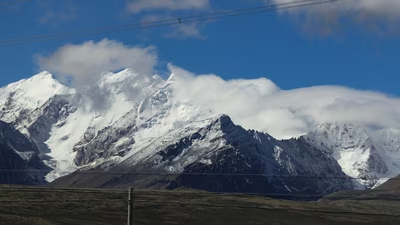
Himalayan glaciers are losing mass 65% faster than they were a decade ago, with one-third of this glacier melt being primarily driven by black carbon, a new study has found. It found while 18% of Indian land is Himalayan, yet the region accounts for about 35% of disasters and contributes to over 20% of India’s GDP.
“The heart of the challenge is a growth model putting pressure on Himalayan systems at three levels. Globally, warming created elsewhere is destabilising a cryosphere the region did not put at risk. Our research shows roughly a third of Himalayan glacier melt is driven by black carbon, largely from brick kilns in the plains, making this one of the few levers the region can pull now,” the report stated. Also Read I Melting glaciers, warming Himalayas: Why Chinese experts cite climate risks for Nepal flash floods
On current trajectories, the study, carried out by the global consultancy Systemiq, in collaboration with the Integrated Mountain Initiative and with contributions from the International Centre for Integrated Mountain Development (ICIMOD) and GB Pant National Institute of Himalayan Environment, stated that the Hindu Kush Himalayas could lose up to 80% of its present glacier volume by 2100. Regionally, black carbon drifting up from the plains settles on the same glaciers, accelerating the melt driving today’s disasters, a lever, unlike global warming itself, the region and India can act on directly.
