
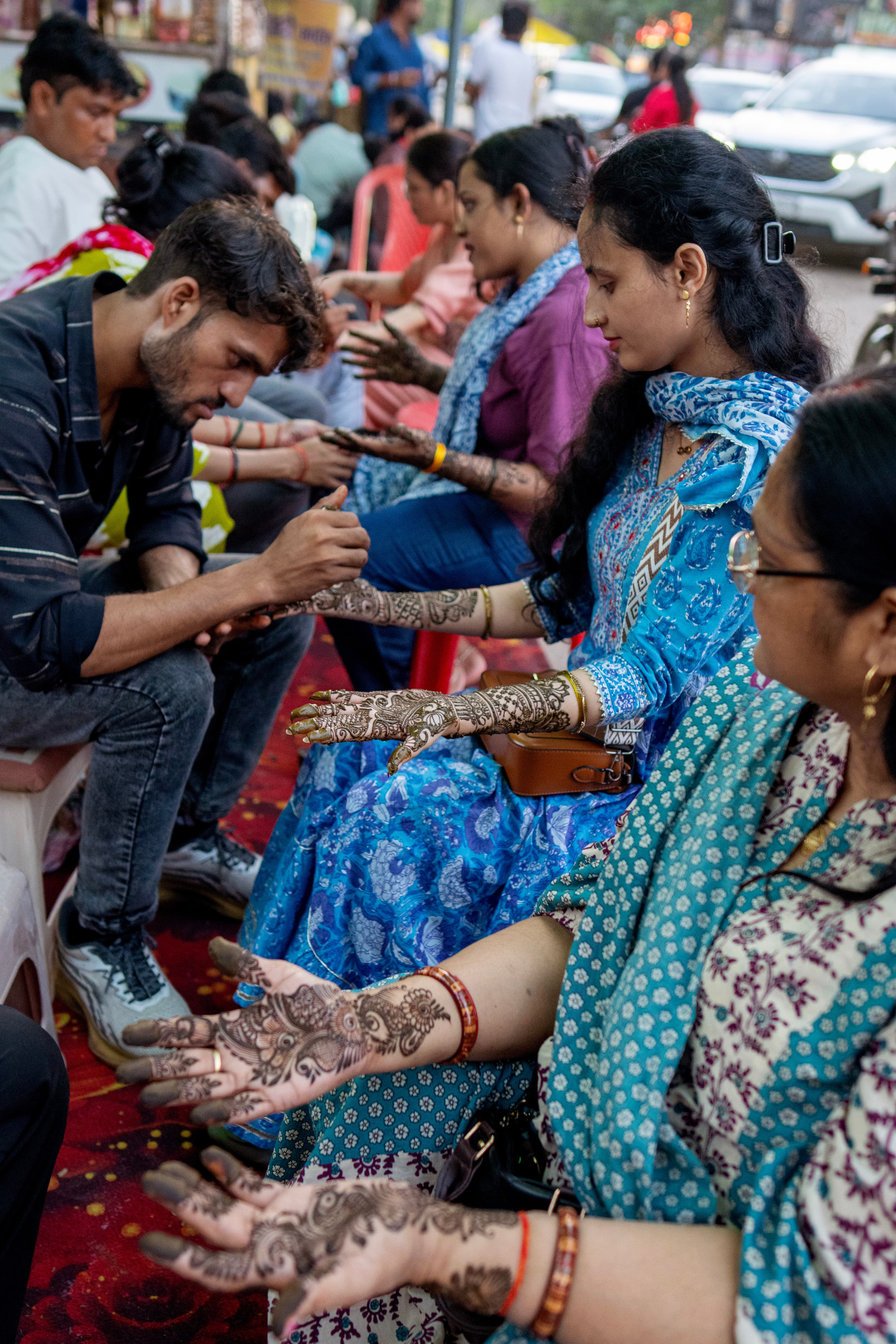
Hartalika Teej 2026: It is an important Hindu festival dedicated to Lord Shiva and Goddess Parvati. Observed primarily by women, the festiva l is associated with prayers for marital happiness, a harmonious relationship and the well-being of the family. In several traditions, unmarried women also observe the vrat while praying for a compatible life partner.
Hartalika Teej is observed on Tritiya Tithi during Shukla Paksha in the month of Bhadrapada. Since auspicious timings can vary depending on the city, devotees should consult the local Panchang for the exact puja muhurat in their area. Morning is traditionally considered the preferred time for Hartalika Teej puja. However, some traditions permit devotees to perform Shiva-Parvati worship during Pradosh Kaal if morning puja is not possible. The traditional Hartalika Teej Vrat Katha revolves around Goddess Parvati’s unwavering devotion to Lord Shiva. However, her father had plans to marry her to someone else. There, Parvati continued her intense penance for Lord Shiva. The name Hartalika is traditionally associated with this part of the legend. Moved by Parvati’s unwavering devotion and determination, Lord Shiva eventually accepted her as his consort. Their union forms the central theme of Hartalika Teej and is celebrated as a symbol of devotion, commitment and perseverance. The vrat katha is not simply about seeking a marriage with Lord Shiva or praying for marital happiness. It also highlights the values of patience, dedication and staying committed to one’s purpose despite obstacles. Hartalika Teej is traditionally marked by fasting and Shiva-Parvati worship. Many women observe a Nirjala vrat, abstaining from both food and water throughout the fast. However, fasting customs vary across regions and families, and devotees should follow practices suitable for their health and circumstances. For the puja, devotees clean and decorate the worship space and prepare or worship symbolic representations of Lord Shiva and Goddess Parvati . In some traditions, idols are made using sand or clay. Devotees offer traditional items such as flowers, fruits and bel leaves to Lord Shiva. Goddess Parvati is worshipped with Shringar items, including bangles, sindoor and other traditional adornments. The Hartalika Teej Vrat Katha is then recited or heard, followed by prayers to Shiva and Parvati. Devotees seek blessings for marital harmony, mutual understanding, family well-being and a peaceful relationship. The central message of Hartalika Teej lies in Goddess Parvati’s determination and devotion. Her penance is traditionally seen as an example of patience, perseverance and unwavering faith. For married women, the festival is associated with prayers for the well-being of their husbands, a happy married life and harmony within the family. Unmarried women may observe the vrat with the hope of finding a compatible and understanding life partner. Beyond marriage, the story of Shiva and Parvati is also interpreted as a representation of partnership and balance. Their relationship highlights the importance of commitment, mutual respect, patience and understanding, values that can strengthen relationships over time.
Tritiya Tithi began at approximately 7:08 am on September 13, 2026, and ended around 7:06 am on September 14, according to the Drik Panchang . The Pratahkal Hartalika Puja Muhurat in Delhi was from 6:05 am to 7:06 am on September 14. Hartalika Teej, therefore, brings together devotion and tradition while reminding devotees of the importance of perseverance, emotional balance and meaningful partnership.
Parvati wished to marry Lord Shiva and undertook rigorous penance to win his acceptance, according to the legend. Determined to continue her tapasya and remain devoted to her chosen path, Parvati’s friend is said to have taken her away to a secluded forest. It is derived from “Harat”, meaning to take away or carry off, and “Aalika”, meaning a female friend, referring to Parvati being taken away by her friend.
