
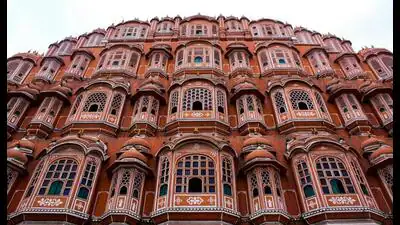
When my wife heard about a table tennis tournament in Jaipur, she agreed instantly. For her, my game was merely an excuse to travel; the Pink City was the true destination. She had long envisioned wandering through Johari and Bapu Bazaars, hunting for jewellery, vibrant textiles, handcrafted juttis, and cushion covers, fully intending to return with far more bags than we carried from Ambala.
My wife had wisely headed to the station early, keeping me updated from her seat. Our itinerary was brisk. We caught the Saturday afternoon Vande Bharat, arriving late that evening. With my tournament scheduled for Sunday afternoon, the morning was reserved for Jaipur’s charm. We strolled through bustling lanes, admired the pink facades, and fuelled up on Sardarji’s famous kachoris and lassi. The tournament lagged behind schedule. After a tight semifinal loss, I found myself playing for third place. Every point brought a nervous glance at the clock; every rally was a desperate calculation. The instant the match ended, I leapt into an auto-rickshaw, promising the driver a bonus for speed. He delivered, but as I sprinted to the platform, the Garib Rath was already gliding away—a classic Bollywood moment, without the cinematic leap onto the footboard.
Then we split up: She resumed her shopping run, and I reported for the veterans’ 50-plus category. By the time the bronze-medal match began around 7.15pm, my opponent stood on one side of the net, while our 8pm train loomed on the other. Because half my mind was already at Jaipur junction remains debatable, whether I lost to better skill or.
A match takes 20 minutes, a missed train costs an hour, but a distracted mind quietly steals the present moment—a reminder that while our minds are often waiting on the next platform, life is happening right at the table. My wife reached Ambala an hour before I did. Looking back, I barely remember the scoreline, but I vividly remember the clock.
