
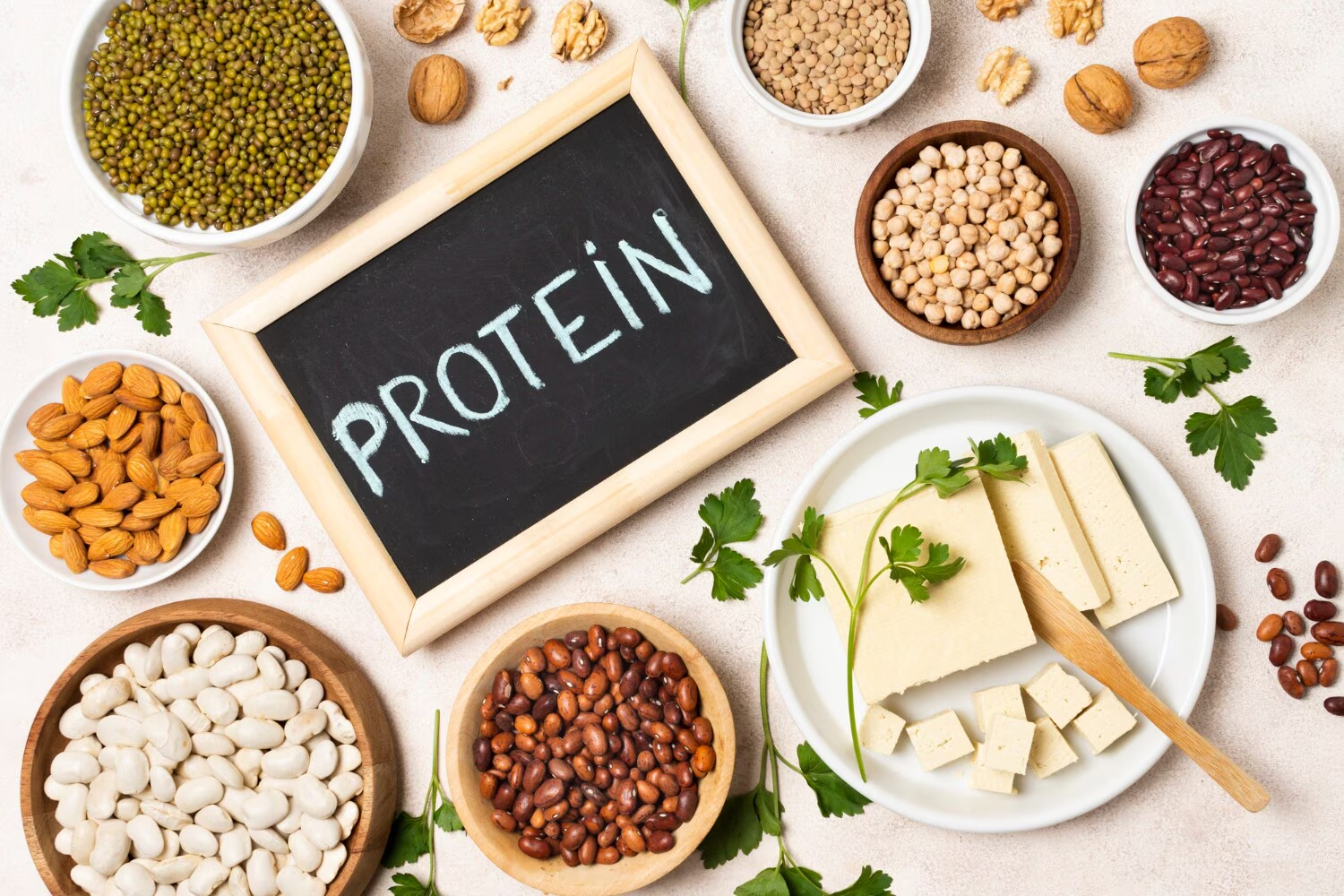
Protein is all the rage now, and for valid reasons as well. Conversations now focus on losing weight more sustainably, which puts protein at the forefront in order to prevent the loss of muscle mass when you lose weight. Everything has protein nowadays, from cookies and ice cream to wafers and chocolates. But amid this rampant demand for protein in everything, and everyone hopping on the bandwagon to have everything protein-based, are you missing the important nuances?
Because of this demand, a lot of focus is on protein-infused products.
Is ‘protein’ on the packaging enough to sway you? We asked experts to break it down and explain how to be more vigilant when buying protein-based products, as not all are inherently healthy. Because of unhealthy things like sugar, sodium, saturated fat, or high in calories, can a product be marketed as ‘high protein’ but still be nutritionally poor.
An industry expert told us that the labels are not enough. Himmath Jain, founder of AS-IT-IS Nutrition, said, “Over the past few years, one thing has become increasingly clear to us: the biggest change in the nutrition category isn’t the words on the label, but the questions people ask after reading them. “Ingredients are listed in descending order by weight, so if maida or another refined flour is the first ingredient in a protein bar, for example, I would question whether this is really a protein-forward food, regardless of how many grams of protein it contains,” she added.
Terms such as ‘high protein,’ ‘clean,’ and ‘natural’ continue to appear across products, but today they’re expected to be backed by greater clarity around ingredients, quality standards, and the science behind those claims.
Next, she also warned about ingredients such as maltodextrin and other fillers or highly processed ingredients.
