O n August 10, Abhijeet Dipke, founder of the Cockroach Janta Party (CJP), said in a video that since Independence, no government has been able to provide students in rural areas with the same facilities as those available to students in urban areas. He pledged to begin checking schools in the district from which he hails, Hingoli in Maharashtra, and request sarpanchs to improve the situation.
“We have constructed a new Parliament and a new residence for the Prime Minister. Why, then, are we not able to construct new schools in our villages? Do we not consider the children of farmers and labourers as the future of our country,” he asked. It asked locals to participate in a three-step audit of schools: ‘download a checklist, conduct the audit, and submit and tag us’. The checklist includes questions about whether the school has drinking water, boundary walls, wash rooms, and midday meals. At Dumri Kewat Tola primary school, in Muzaffarpur district in north Bihar, the plaster sometimes falls in the corridor outside the two classrooms. They share space with two goats, which play on the corridor, and occasionally wander in to be petted. Under the crumbling roof of the corridor stand two motorcycles — they belong to the teachers. The six teachers of the school use the neighbours’ bathrooms, they say, but the children must simply go in the open, or not at all. The school has no space to build, say the teachers. The principal, Umesh Ram, is sad that the school has only two rooms. The teachers complain about space constraints and the fact that the area floods in the rains. The students say their midday meal is tasteless. “Sometimes there are insects in it. In the adjoining Vaishali district, the primary school at Mirpur Pathad Rajdeo Rai Ka Tola does not even have a building of its own. The students sit on new benches. “You can imagine the difficulties we face here every day. The Block Education Department of Rajapakar could not be reached. On its department website, the Bihar government proclaims, “Education is the pillar upon which the fate of a country depends. In Unchki village in Rajasthan’s Deeg district, there is no public road to the Rajkiya Prathmik Vidyalaya, which is blocked by a graveyard on one side and high boundary walls on the other. Locals say students have no option but to walk through the graveyard. From there, they traverse a thin, muddy path, surrounded by overgrown plants and shrubs, to go to school. Keechar bohot hai (We have to come cautiously; it is very muddy). Students say corridors are their classrooms. Behind the school there are two brick structures with overgrown shrubs. They open onto the fields and have no doors. In Rajkiya Prathmik Vidyalaya in Amrooka village in the same district, again students say they sit on a corridor outside the classroom which does not have electricity. The Rajkiya Prathmik Vidyalaya, in Bas Bolkheda village in Deeg, is located on a hill and caters to students from the neighbourhood. As they leave, students say they have had fun, running around the classroom. They say there are two teachers; neither had come that day. A temporary teacher assigned from another school visits them after finishing his day at the school where he is posted. The teachers in all the three schools say they have received strict orders from their supervisors not to speak to the media. There is one empty teaching post in one of the schools. “We all take turns to teach students from another class. a nodal officer in each block frequently visits the school, serving as the principal While there is no permanent principal. Locals sitting under a tree near the school say children do not learn much in government schools compared to private schools. “The government is focused on education. It is trying to increase or convert funds wherever possible. Narayan, who lives in an urban settlement near Dayal Chauraha in Gomti Nagar, Lucknow, is a cab driver. “We believe the wash room at her government school caused the infection. It’s really dirty. “My son goes to a private school; now both will go together. “The water facilities in the wash room are dysfunctional at times, so we have to arrange for water from the houses nearby. Narayan feels the dismal infrastructure also impacts productivity. Students are absent; they have not returned to classes after the festival of Raksha Bandhan. The school is located in a dilapidated building. It is in the same premises as the village panchayat office and a community centre ground. there are no benches for students While teachers have chairs and tables. The classrooms have mats on the floor, dim lighting, and a few broken almirahs. the other two have fans that are out of order While one classroom does not have fans. The walls and the roofs have rainwater seeping through during the monsoon. The government school in Sarvar, Bhopal district, Madhya Pradesh. The classrooms don’t have an electricity connection and many do not have fans or lights. The government middle school here appears clean and well maintained. There is a boundary wall and a gate, and the campus has plants. However, a conversation with the students reveals a different story. The switchboards have been removed and the wires taped shut. The summer heat is intolerable. this is one thing that we all want fixed at the earliest While I like my school and teachers. There are only two teachers of the primary classes present. “We have sent annual proposals for repairs for five years but no one has taken cognisance of it. There is barely any attention on such matters from the department. Students also complain of poor quality of food and say that many prefer to bring food from home. At both schools, the worried staff asked if this was an inspection by the Cockroach Janta Party (CJP) or whether permission had been obtained from senior officials. An official at the School Education Department highlights a gap in the government’s approach towards different kinds of schools in the State. This story was edited by Radhika Santhanam
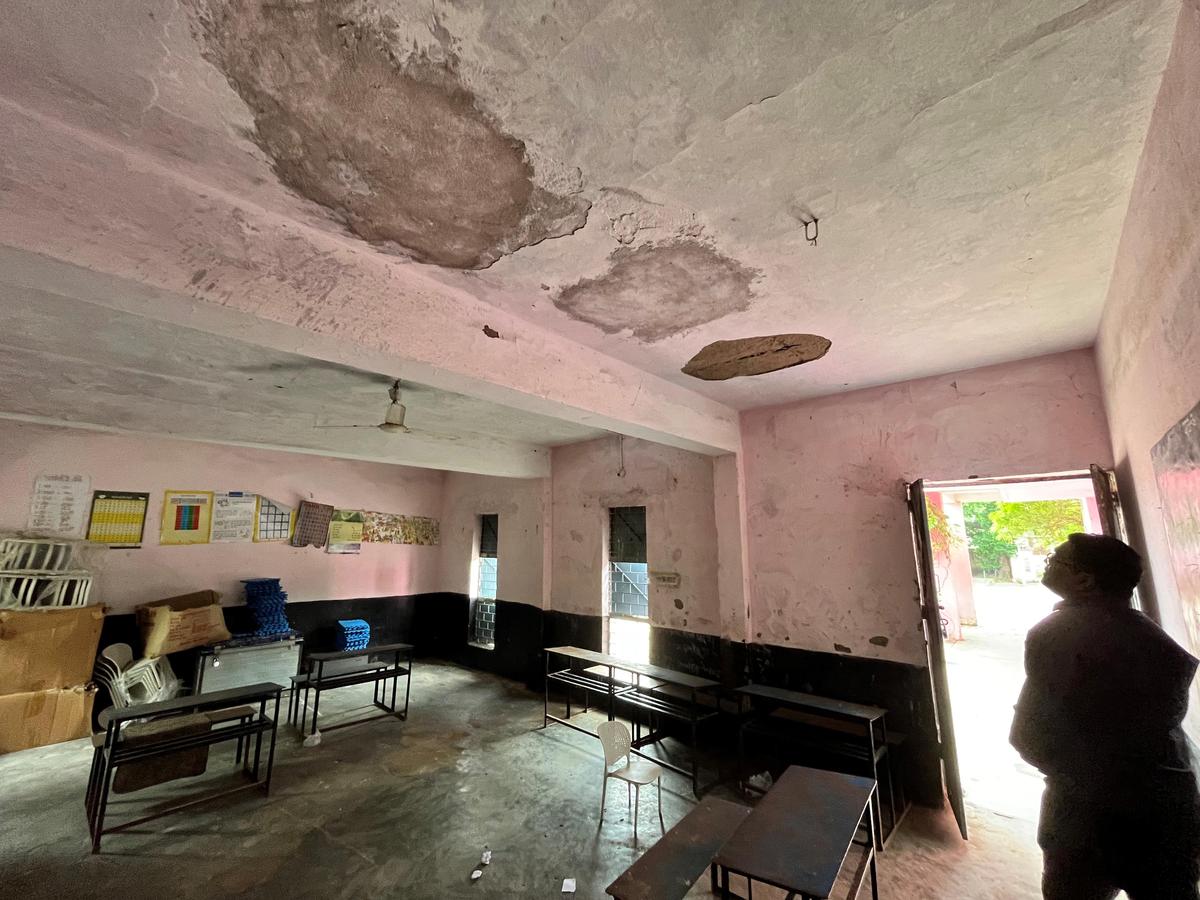
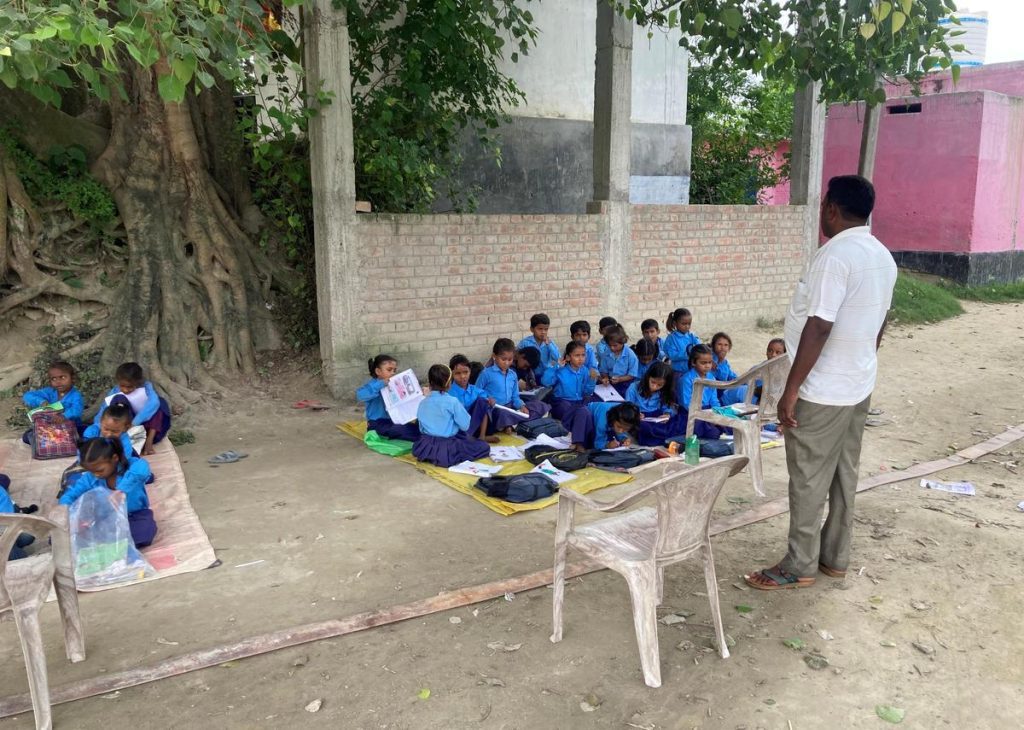
Since August 15, the CJP’s ‘School thik karo (reform schools)’ campaign has shone a spotlight on the condition of schools across States, with issues ranging from broken roofs to a lack of washrooms and drinking water. All the 119 students crowd into the pink building, which was painted six months ago but is already peeling. He travels 15 kilometres daily, one way, to reach the village. At the middle school at Budhnagra Jagannath Malikana Tola, established in 2002, there are 10 teachers and 283 students. | Photo Credit: Amarnath Tewary At the middle school, a kilometre away, at Budhnagra Jagannath Malikana Tola, established in 2002, there are 10 teachers and 283 students. Students of Class 8 sit on the veranda, and those of Classes 1 and 2 under a tree behind the kitchen. It runs in a community centre, established in 2014. The school, from Classes 1 to 5, runs in a single room, which is also stuffed with rows of department almirahs and midday meal utensils, tables, and broken chairs. There are 91 students and three teachers, including the headmaster, Vinod Kumar. A student of Class 3 says, “ Bach bach ke aana padhta hai. One student says, “The teacher teaches both Class 4 and 5 together. The district falls under the National Capital Region and is only 165 km from Delhi. There are 85 students enrolled in the school. In all three schools, the teachers say 50-60% of the total enrolled students come to school daily. Private schools have all the facilities, but they cost around ₹18,000 a year. A worried Digvijay Narayan (name changed), 44, asks his wife which non-essential expenses they can cut to reduce their monthly spending. She had symptoms for more than 10 days,” he says. He is anxious about arranging an additional ₹1,000 per month for the move. Around 1 p.m., five teachers sit in two classrooms at the government middle school in Hirapur village of Madhya Pradesh’s Sehore district, about 40 km from the State capital, Bhopal. The four-room school, which includes a small principal’s office, has only 22 students enrolled across eight classes. The switchboards have been removed and the wires taped shut. | Photo Credit: Mehul Malpani About 20 km from Hirapur is Sarvar village in Bhopal’s rural outskirts. A Class 8 student says, “Since there is no light in the classrooms, it is difficult to study here, especially during the monsoon when we have to shut the windows. The school has a strength of 104 students. All the three teachers for Classes 6-8 are on leave, while the principal, Suresh Malviya, is at an official training exercise. The school gets ₹25,000 annually for miscellaneous works, which is not enough to repair the building.
Because there are not enough rooms in the building to accommodate all of them or no electricity, this is either. Because there are no wash rooms, this is. Because of infrastructural issues, the teachers also admit that many students do not attend class. Because they live in predominantly Muslim areas, locals also allege that governments do not pay attention to their requests. He is considering moving his daughter, Payal Gautam (name changed), 11, from the Government Primary School Gwari in Vikas Khand in Lucknow to a private school after she suffered a prolonged illness due to a urinary tract infection.
“We dread walking on this veranda,” says one teacher. “The school was established in 1982, but there is no boundary wall, no wash room, no sports ground, and no space to store the midday meal supplies,” says the headmaster, Sanju Kumar. We want our food to be better,” says one student. The district education officer says he has written to his superiors in Bihar’s Education Department about the schools’ demands. “The school has no playground, no wash room, no kitchen shed, nothing at all,” says Uday Kumar, a teacher who travels about 40 km every day to reach the school by motorcycle. When more students come to school than the space allows, they have to sit under a huge banyan tree nearby to study,” says Kumar. “My children come home during the middle of the day and then go back to school,” explains Sakira Khan, a mother of two children who study in this school. One says, on the condition of anonymity, “We keep writing to the district authorities about the shortage of classrooms, but they say they do not have the budget. “We are forced to manage,” explains another teacher. Aas Mohammad, whose granddaughter skipped school for the day and is playing nearby, says, “It is not possible to send all my grandchildren to private schools. District Magistrate Mayank Manish says if Education Department officials receive complaints from schools, they act on them quickly. Teachers’ vacancies are filled regularly, and online materials are made available in case of a shortage of teachers,” he says. On specific concerns such as the lack of toilets and pathways to schools, he says officials will look into the matter. I will ask the management to give me some concession,” he says. Payal says she travels over a kilometre by foot to go to school every day. Drinking water, she says, comes “in fits and starts. About the wash room, she says she will never use it again. “A peaceful atmosphere, like what you find in a private school, will help the student focus on their studies and lower stress,” he says. Over the phone, Malviya says that the school building has been in poor condition for about five years. The electricity connection had to be cut since water was leaking through the ceiling and there was risk of it reaching the wires, he says. The money is utilised for hiring a cleaning worker once a month for wash rooms,” Malviya says. Another teacher says, “The floor, the boundary wall, and the gate — or anything that appears in a good condition — was built by the village panchayat after a school alumni became its head a few years ago. “The dal is watery and the rotis are often burnt or not properly cooked,” says Aniket Meena, a Class 7 student.
“Over the past few years, the focus has been on flagship institutions like Sandipani (earlier known as CM Rise) Schools and Excellence schools, so naturally small rural schools, which were already not in a very good condition, have been struggling even for basic infrastructure now.
Most of the 22 students at the school are from marginalised communities, he says. Because of its poor condition, the school in-charge, Mahendra Singh Sisodia, says students from eight classes are being accommodated in three classrooms after the primary school building on the same premises was abandoned about six months ago. Next to the school building is a small pit filled with dirty water covered by green moss and surrounded by bushes. The community centre ground is filled with cattle dung. Stray dogs roam around. There are two wash room complexes on the opposite sides of the ground — one for the staff and the other for students. However, in the students’ complex, only one of the two wash rooms is functional, forcing female and male students to use the same toilet. Since the premises do not have a gate, some people also use the ground for drinking at night, he adds. A small room is used as the kitchen to prepare the midday meal for the children. “I have informed Education Department officials at the district level and they have instructed me to make arrangements for now. So, I have been buying ration for the school. The school falls under the Ichhawar Assembly segment, the constituency of the State Revenue Minister, Karan Singh Verma.
“Other dominant communities in the village send their children to private schools, so this school does not get much attention,” he says. Sisodia says that the self-help group designated to prepare the meal stopped its services about three months ago. Hopefully the money will be reimbursed soon,” he says, adding that the school also does not have drinking water supply and the students bring bottles from home.