
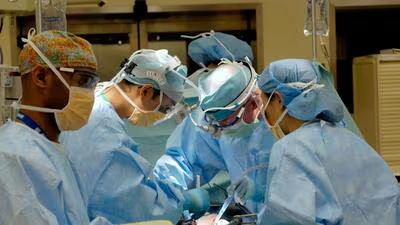
A genetically modified pig’s kidney kept a 66-year-old man with end-stage kidney failure free of dialysis for a record nine months before he successfully received a human kidney, according to a study published in The Lancet.
Kidney transplantation provides the best survival and quality of life for patients with end-stage kidney disease, but the demand for the organ far exceeds supply. The authors emphasised that this case showed that porcine kidney xenotransplantation can provide prolonged renal support and be discontinued without clinically significant allosensitisation or zoonotic infection. Early cellular rejection resolved with treatment, whereas later graft failure was associated with microvascular injury that progressed to thrombotic microangiopathy despite a negative donor-specific crossmatch, suggesting that mechanisms beyond conventional antibody-mediated rejection contributed to late graft injury.
In this new case study, the patient had kidney failure caused by type 2 diabetes. He had an estimated 9% chance of receiving a human kidney within five years, against a more than 40% risk of dying or being removed from the waiting list.
The report, titled “Porcine kidney xenotransplantation as a bridge to allotransplantation: a first-in-human study,” detailed the procedure performed at Massachusetts General Hospital in Boston. Kidney xenotransplantation offers a potential solution to the organ shortage, but questions remain regarding durability, zoonotic infection risk, and whether the immunological response to the xenograft elicits sensitisation that could complicate subsequent allotransplantation, according to the authors. “Despite sustained kidney function, the patient died from unexpected, sudden cardiac causes on day 52; autopsy revealed severe coronary artery disease and ventricular scarring without evident xenograft rejection,” said the authors in the paper.
Last year’s study titled ‘Xenotransplantation of a Porcine Kidney for End-Stage Kidney Disease’ highlights the first case and how xenotransplantation offers a potential solution to the organ shortage crisis.
