
One of the pleasures of studying the history and culture of food is discovering where a single line in an old book, newspaper, or a recipe can lead. A passing reference to a dish, an ingredient or even a particular fruit can open up a much larger story, taking you across kitchens, gardens, markets, and continents.
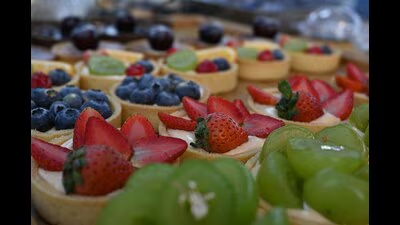
“Only fit for tarts. They were the second crop of the vine; the first appeared between January and March. Unlike the sweet grapes of the principal season, these were sour. They were abundant, but of little value as table fruit. its identity remained controversial Although some English and American gardeners regarded it as an excellent late-season grape. Nineteenth-century horticulturists variously equated it with Raisin des Carmes, West St Peter’s and, later, the Lombardy grape, while others maintained that these were distinct varieties. A tart is a pastry dish with a firm, usually sweet crust and an open top, filled with fruit, custard, jam or another mixture. Unlike a pie, which is often enclosed with pastry, a tart leaves its filling exposed. The tart was part of the European culinary repertoire that came to India. Cooks in Anglo-Indian households gradually adapted tarts to the fruits that were available locally. This reflected the broader practice of adapting European recipes to Indian ingredients and seasons. Fruit could be turned into jams, jellies, puddings and tarts, allowing cooks to use produce that was plentiful at particular times of the year. Dalrymple’s recipe shows that sour or underripe grapes could be used in pastry. Verjuice grapes, valued for their acidity, had long been used in European cookery. Dalrymple’s recipe combined that sharpness with sugar, syrup and pastry. The Anglo-Indian cookbooks from the Bombay Presidency that I have examined do not mention grape tarts. Instead, she included recipes for a variety of fruit tarts, including apple tart with cream, currounda tart, currant tart, damson tart, gooseberry tart, and greengage tart.
That was how Robert Riddell described the green grapes appearing in Poona’s markets in September in his “A Manual of Gardening for Western India” (1842). An early recipe for grape tart could be found in “The Practice of Modern Cookery” (1781) by George Dalrymple. Titled “Tourte de Verjus” (Verjuice-grape Tart), it reads: Stone and blanch the grapes a little in boiling water, then drain them very well, and stew them a little while in good syrup; when this is cold, put it in puff-paste, without covering it, and glaze the border with sugar. In “Anglo-Indian Cuisine” (1904), Constance E Gordon, who frequently visited Poona, did not write a recipe for grape tart.
